A relationship-first training approach that helps dogs feel safe, seen, and secure in a human world. This isn't just a training framework. It's a call to slow down, connect, and choose love as your leadership language.
Training is not about perfect performance. It's about building trust, regulating the nervous system, and helping your dog feel understood in a world that often overwhelms them.
When you commit to loving your dog through leadership, you become the safe place they're always looking for.
"We don't train obedience into a dog. We train safety into them, and obedience follows."
Kelty Forman, Founder, Scentsible K9 TrainingThree pillars that shape how we train, live with, and love our dogs. These are not steps to rush through: they are lifelong foundations we build together.
"Fear is the worst thing a social species can experience."
Dr. Karen Overall, Veterinary BehavioristBefore a dog can listen, obey, or engage, they must first feel safe, not just physically, but emotionally and neurologically. The SAFE pillar isn't about pampering a dog or avoiding all challenge. It's about establishing the biological conditions that allow learning to happen in the first place.
At the core of safety lies the nervous system: a dog's internal command center for regulation, reaction, and resilience. When we train a dog without attending to their nervous system state, we're attempting to pour knowledge into a shut, locked, and alarmed house. Safety is the key that opens the door.
According to Polyvagal Theory (Stephen Porges, PhD), the ventral vagal branch of the PNS enables social connection, curiosity, and co-regulation. But when a dog perceives threat, they shift into one of two survival states:
Critical: Never correct a dog in shutdown. Never mistake freeze for obedience. Corrections in a shutdown state cause lasting damage to trust.
Structured routines reduce anxiety and provide predictability. Meals, potty breaks, walks, and rest at the same times each day build a sense of control and safety for the nervous system.
Always begin sessions with low-pressure engagement before introducing commands. Read the dog's nervous system state before reaching for any tool or cue.
A well-conditioned crate is a secure decompression zone, not a punishment. It's a place where the dog is not expected to interact, and the nervous system can genuinely rest.
Let the dog sniff, explore, and move at their own pace on a long line. No agenda, no commands. Sniffing activates the parasympathetic nervous system and directly lowers cortisol.
Don't let strangers flood them. Advocating for your dog's space is an act of leadership. It tells them: "I see what you need and I've got it covered."
In The Scentsible Method™, the SEEN pillar comes through attunement, observation, and relationship-based responsiveness. When a dog feels seen, they know that their signals are heard and respected, their needs are acknowledged, and their emotional states are valid.
Recognizing that dog behavior is a form of communication is crucial. When dogs feel overlooked, they may hesitate, shut down, or display "problem behaviors." These actions often stem from unmet needs rather than defiance.
Teach eye contact not as a demand, but as a connection point. Eye contact should feel like an invitation, not a requirement.
Let your dog set the pace, and reward voluntary check-ins. The dog choosing to look back at you is engagement, and it must be worth it.
Sit quietly with your dog. Match their breathing, energy, and posture. This builds co-regulation: your calm becomes their calm.
Track your dog's signals for one week. Write down what you notice and how you respond. Patterns you couldn't see become visible over time.
A secure dog is not one that has never experienced fear. It's one that has learned how to recover from it. Through fair corrections, consistent routines, and leadership rooted in relationship (not control), our dogs learn to co-regulate with us. Their nervous systems begin to settle because they know we have them.
Security is not just an emotional state. It's a neurobiological one. When a dog knows what to expect from their world, their brain and body begin to operate from a place of safety, not survival.
Security isn't about being perfect, it's about being consistent. Simple routines like consistent walks, calm place command practice, and co-regulation exercises build a sense of safety over time.
| Secure Dog | Insecure Dog |
|---|---|
| Explores new environments with confidence | Freezes or clings in new situations |
| Recovers quickly from stress | Stays dysregulated long after the trigger is gone |
| Uses the handler as a "safe base" | Hyper-attaches or ignores the handler entirely |
| Responds reliably to known commands | Inconsistent, selective, or shuts down under pressure |
| Tolerates being alone without distress | Separation anxiety: destructive, vocal, or collapse |
Every SK9 program stands on one daily practice: the search. Nose work is not one class among many. It is how we regulate nervous systems, build confidence, and let dogs solve problems as themselves.
"Nervous systems first. Behaviors second. The search is where both get built."
Kelty Forman, Founder, Scentsible K9 TrainingSniffing is not a hobby for dogs. It is their primary sense and a direct line to the parasympathetic nervous system: ten minutes of real searching downshifts arousal in a way no amount of obedience can. That is why nose work sits at the base of everything we teach.
Professional detection dogs walk in obsessed with hunting. Our clients bring us pets, rescues, and dogs living in chronically stressed or under-stimulated states. Our first job is to install what the professionals get for free: raw desire to hunt, carried by a nervous system that feels safe enough to use it. The dog finds and eats the reward himself. No permission, no human in the middle. That agency settles a nervous system in a way no soothing can.
Everything above the base collapses without it. When we are unsure what to work on with a dog, we drop down a level.
Every dog arrives with a nervous system pattern, and the search meets each one where it is:
The only job is down-regulation and safety. We shrink the picture until the dog can play. Repeating a foundation class is the program working, not failing.
Regulate, never suppress: short searches, on leash, end before boiling, and let rest consolidate the good feelings.
The game feeds the seeking system they have been starving for. We keep them stretched.
Often heavily trained dogs who have learned the game never belongs to them. They need clarity and patience; the breakthrough is the moment the dog realizes the search is his.
Progression rule: dogs move up on independence, environment, and confidence, never on weeks elapsed. There is no required timeline. The dog who takes longer is not behind; he is getting exactly what his nervous system needs.
The search is Safe, Seen, and Secure in action. The room is engineered so the dog is safe. The handler learns to read every change of behavior, so the dog is seen. And success after success in new places is how a dog becomes secure. That is why nose work is the cornerstone: it is the method, practiced.
Anxiety, Aggression, and Avoidance: natural but often misunderstood expressions of nervous system dysregulation. Every bark, lunge, and freeze is a message, not a malfunction.
Dogs don't "misbehave" out of spite or stubbornness. They behave according to the state of their nervous system. When we interpret these behaviors through a lens of survival, stress, and neurobiology, we can begin to see our dogs not as disobedient, but as dysregulated.
"Anxiety is a thin stream of fear trickling through the mind. If encouraged, it cuts a channel into which all other thoughts are drained."
Arthur Somers RocheAnxiety is not disobedience. It's a dysregulated nervous system stuck in mobilization, unsure whether to flee, fight, or freeze. These dogs live in a biological "maybe," where their body is ready to act, but the brain hasn't determined the right response.
The result? Frantic energy. Constant motion. Overactivity to small stimuli. Many anxious dogs become hyper-attached to their handler as a life raft in a world that feels chaotic.
Predictability soothes the nervous system. Meals, potty breaks, walks, and rest at the same times each day build a sense of control and safety.
Not just a skill, but a neurobiological state. Begin in calm spaces before using it in busier settings.
This isn't punishment. It's a way to train the body to be still so the mind can settle. The goal is a dog who has learned to regulate their nervous system on cue.
Use slow breathing, a calm voice, and relaxed body language to model safety. Your dog's nervous system takes direct cues from yours.
Too much freedom, social pressure, or activity without rest can flood the system. Keep early training simple and structured.
Some dogs may benefit from calming pheromones or CBD products during stressful times. These are tools, not solutions. Supplements can lower the intensity of anxious behavior enough for training to be more effective, but they should never replace structure, clear communication, or emotional connection.
Aggression isn't a behavior to eliminate. It's a message to understand. It says: "I'm overwhelmed. I don't feel safe. I don't know what else to do." Dogs are wired to use ritualized signals first: growling, stiffening, lip curling, side-eye, freezing. But when we punish those signals, dogs learn that only an explosion will be heard.
Never punish the growl. Growling is communication. Punishing it removes a warning sign and can push dogs to escalate without warning.
List what causes escalation. Observe the distance and intensity where the dog starts to tense up. Watch for early warning signs: stiff body, stare, stillness, closed mouth.
You can't train an overwhelmed brain. Use calming tools: place work, decompression walks, routine. Teach default behaviors like look at me, retreat behind handler, go to place.
Gradually expose the dog to the trigger below threshold with positive outcomes. Mark calm behavior and reward. Repeat until the dog starts to associate the trigger with safety.
If escalating: interrupt early, redirect to a known behavior, and recover with regulation strategies (move away, place, calm handler energy). The goal isn't perfection, it's reducing intensity and recovery time.
Every aggressive behavior is a communication strategy. Teach your dog a new way to communicate what they need: instead of lunging → retreat behind handler; instead of resource guarding → drop it for reward.
Aggressive dogs often practice being tense more than calm. Build neural muscle memory for relaxation: long duration place, chill time around triggers with no pressure, massage, chews, enrichment. Calm is a skill.
Resource guarding is not dominance, stubbornness, or selfishness. It's a protective survival strategy rooted in the nervous system. From a polyvagal perspective, guarding occurs when the dog's nervous system is activated into a sympathetic or dorsal vagal response. It's a stress response, not a character flaw.
| Tool | How It Works | Nervous System Impact | Risks |
|---|---|---|---|
| Prong Collar | Even pressure when leash tightens | Activates SNS, can heighten arousal if dog is already dysregulated | Easily misused. Not suitable for high arousal or fear states |
| E-Collar (low-level) | TENS-like pulse to signal a cue | Neutral or aversive depending on use. Creates confusion if misused | High misuse potential. Requires conditioning and handler neutrality |
| Slip Lead / Choke | Tightens with leash tension | Sudden tightness spikes sympathetic arousal | Risk of tracheal injury. High risk of increasing anxiety |
| Martingale | Tightens slightly, won't choke | Slight SNS activation, less invasive than choke | Not a correction tool on its own |
If fight isn't safe, and flight isn't possible, the body defaults to dorsal vagal activation. Shutdown is not calm. It's not obedient. It's a functional freeze: a last resort when the nervous system perceives no available option for escape or control.
When dogs feel pain, their nervous system prompts defensive reactions including withdrawal or immobility. Always rule out pain: training won't be effective if a dog is in distress.
Inconsistent rules and emotional volatility from the handler cause chronic low-grade stress. This nervous system fatigue leads dogs to withdraw to avoid conflict. Be a calm, predictable anchor.
Dogs develop learned helplessness when punished for showing discomfort, leading them to stop trying to communicate. Build trust using choice-based training and small wins.
Insufficient physical and mental exercise leads to overstimulated dogs unable to relax. Ensure regular outlets for movement, problem-solving, and natural behaviors like sniffing and chewing before expecting calmness.
Some breeds are genetically predisposed to heightened sensitivity. A sensitive nervous system can be supported: customize training for the individual dog.
Shut down dogs don't need more obedience reps or stricter structure right now. They need emotional permission to re-engage. Remove all non-essential expectations. Let them observe from a distance. Focus on coexisting peacefully.
Engage the senses gently. Use sniffing games with treats in grass, lick mats, chews, slow food puzzles, soft music, massage. These activate the parasympathetic nervous system, helping the body re-enter regulation.
Offer choice and consent. Shutdown often stems from a loss of control. Let the dog start making low-stakes decisions. Freedom of movement (even small) starts to rebuild confidence.
Regulate yourself first. You are their emotional anchor. If you're tense, rushing, or frustrated, their system will mirror that.
Dogs learn in two fundamental ways: classical conditioning shapes emotional associations, and operant conditioning shapes behavior through consequences. Learning only occurs when the nervous system is regulated.
Classical conditioning is associative learning: a neutral stimulus becomes associated with an emotional outcome. Eventually, the dog reacts emotionally before the outcome even happens because the body learns to predict it. Dogs are constantly learning emotional associations, whether we mean to teach them or not.
Operant conditioning teaches that choices lead to specific outcomes. Unlike classical conditioning (which focuses on emotional associations), operant conditioning teaches that consequences shape behavior.
| Quadrant | Definition | Example |
|---|---|---|
| Positive Reinforcement (+R) | Add something pleasant to increase behavior | Treat for a calm sit |
| Negative Reinforcement (−R) | Remove something unpleasant to increase behavior | Release leash pressure when dog yields |
| Positive Punishment (+P) | Add something unpleasant to decrease behavior | Leash correction for lunging |
| Negative Punishment (−P) | Remove something pleasant to decrease behavior | Turn away when dog jumps |
Critical note: Dogs do not learn well when dysregulated. A leash pop on a panicked dog may reinforce fear. A treat offered to a shut-down dog may not register. A correction during a meltdown may escalate reactivity. Before applying any operant tools, assess the dog's emotional state.
To help a dog achieve a regulated state, we must honor the order in which their nervous system calms:
Affection offered during high arousal or anxiety reinforces instability. Affection offered in a calm, ventral vagal state strengthens the human-dog bond. Affection is the reward for calmness, not the remedy for chaos.
Not all dogs begin their lives with a blank slate. Emerging research in epigenetics reveals that trauma can be biologically inherited: traumatic experiences in one generation can chemically alter DNA expression in the next without changing the genetic code itself.
This doesn't make the dog "bad," "broken," or "defective." Your role as a handler is not to erase the past. It's to become a stable, predictable presence that helps rewire the dog's sense of safety in the present.
Key terms from The Scentsible Method™, defined through the lens of nervous system science and relationship-based training.
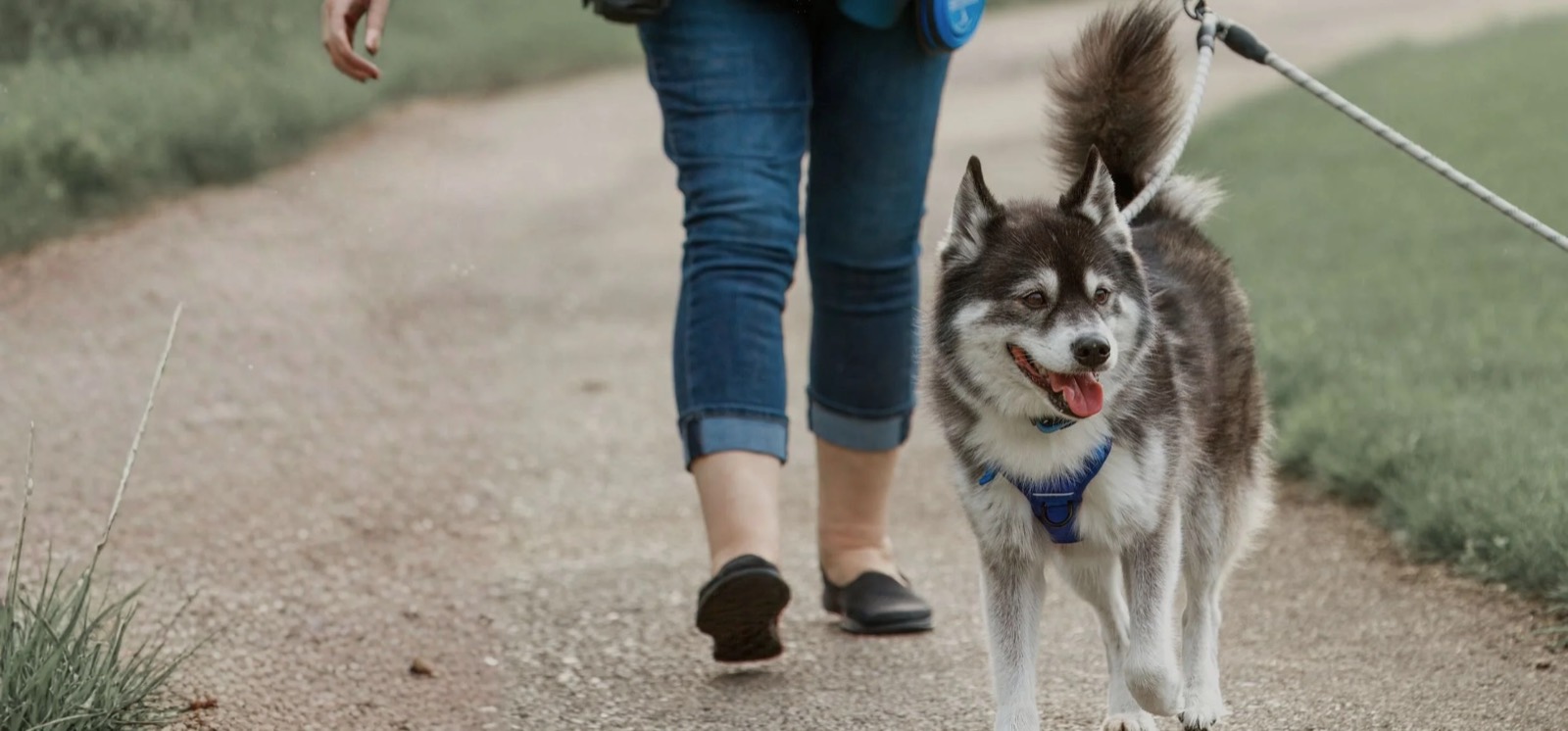
Calm is not a trick.It is a nervous system.
READY TO
BUILD A SAFER DOG?
Every dog deserves to feel safe, seen, and secure. Book an in-person consultation and leave with a clear plan tailored to your dog.
Book a Consultation Take the Free Quiz
"We don't train obedience into a dog. We train safety into them, and obedience follows."