WE'VE WORKED EVERY CORNER
OF THE DOG WORLD.
ONE TRUTH KEPT PROVING ITSELF.
We help dog owners understand why nothing has worked and build a real relationship with their dog so the results actually last.


Most Dog Trainers Give You a List of Commands and Send You Home.
We Do Something Different.
Our founder Kelty Forman spent years working every corner of the dog world. Daycares, grooming shops, search and rescue, police K9 units. She trained under the best and studied every method available.
And she kept noticing the same pattern. Results that lasted a few weeks. Dogs that performed in training and fell apart at home. Owners doing everything right and still feeling like they were failing.
So she kept asking: why? What was the common thread in every dog that made lasting progress? What was missing in the ones that didn't?
The answer kept proving itself over 1,000+ dogs across every breed, background, and behavior challenge. It was never the command. It was always the relationship.
Nervous System First
You can't train a dog that isn't ready to learn. We address state before we address behavior.
Understanding Over Compliance
We teach owners to read their dog, not just cue them. Real comprehension creates lasting change.
Results That Hold
Not just in a controlled training session. In your home, on your walks, in actual life.
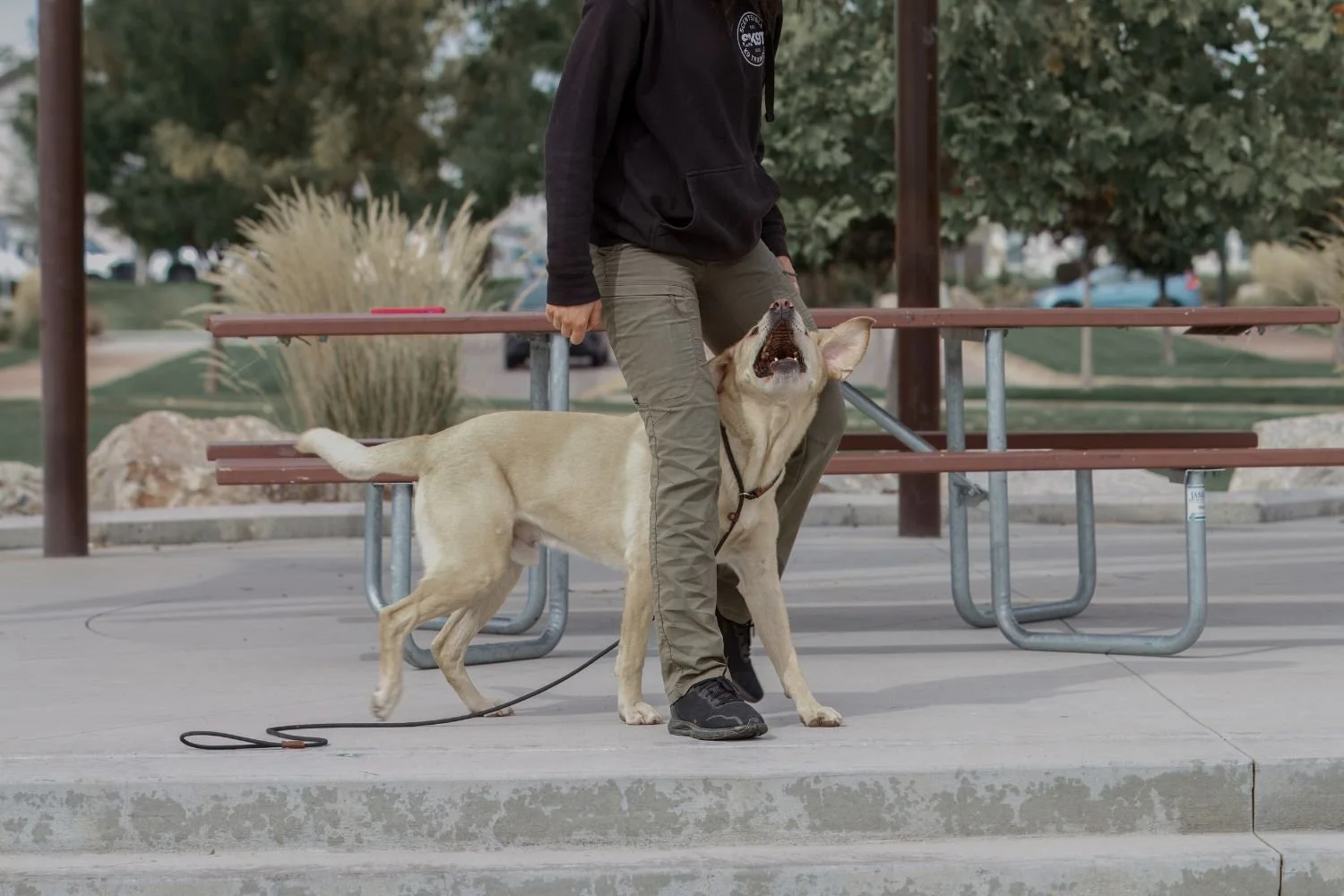
"The most permanent results always came from the relationship. Not the correction. Not the command. The relationship. That's what this entire method is built around."
MOST TRAINING WORKS
UNTIL IT DOESN'T.
Traditional training asks "how do I get my dog to stop doing that?" instead of "why is my dog doing that in the first place?" One question treats the symptom. The other treats the cause.
When a dog is overwhelmed, confused, or afraid, their nervous system is in survival mode. In that state, they literally cannot process new information, form new habits, or choose differently. Adding corrections to an already dysregulated animal just adds more noise.
You can force a dog to comply. You can't force them to be ready to learn. Those are two completely different things, and that gap is why traditional training results rarely stick beyond a few weeks.
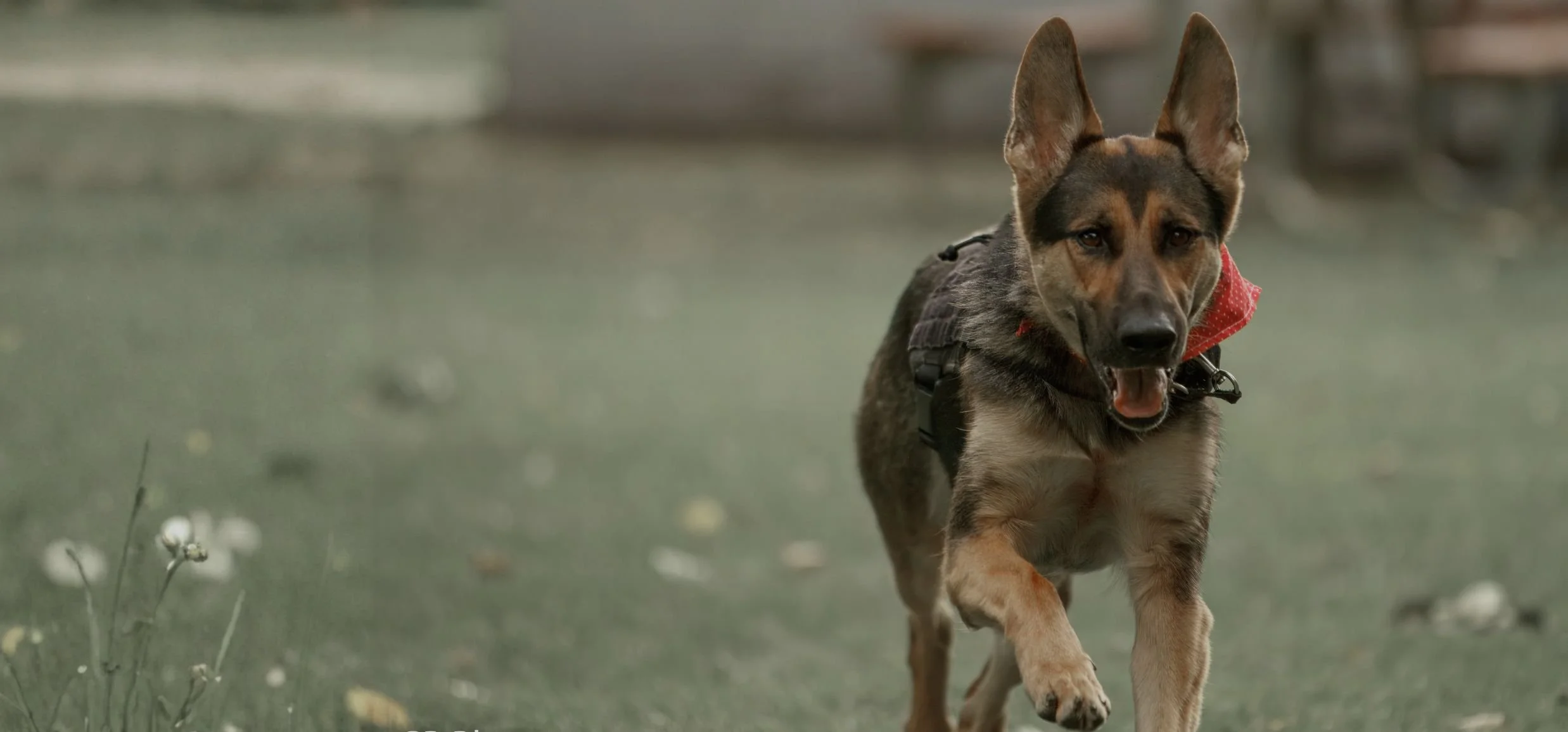
THE THREE PILLARS
OF THE METHOD
Every dog. Every session. Every outcome traces back to these three.
Safe
Nervous System Regulation FirstBefore we work on any behavior, we work on what makes learning possible. A dog in survival mode can't process new information. We identify what's driving the overwhelm and remove it, so the nervous system can settle and real change can begin.
Seen
Communication & UnderstandingDogs communicate constantly, through body language, movement, attention, and avoidance. Most owners miss most of it. We teach you to read your dog the way your dog is trying to be read. When a dog feels understood, trust follows. And trust is where everything else starts.
Secure
Confidence Through StructureSecurity comes from predictability, not control. Dogs that feel secure in their environment and their relationship don't need to test limits. We build that confidence through structure and real-world practice, so the behavior holds not just in training, but in actual life.
Safe. Seen. Secure. In that order. Every time. Because a dog that feels all three doesn't need to act out, and an owner who provides all three doesn't need to fight for compliance.
NOT EVERY TRAINER IS
RIGHT FOR EVERY DOG
A surgeon does not operate on the whole body. They train in one system, go deep, and refer out everything else. Nobody calls that a weakness. It is the reason you trust them.
We help dogs regulate their nervous systems so they can feel safe and understood in a human world.
That is the specialty, and it is the reason we can tell you plainly what we do. We are built for four kinds of dogs. They look different from the outside and they share the same root.
Overwhelmed
Anxiety, fear, reactivity, or shutdown.
Overexcited
Jumping, pulling, no impulse control.
Confused
Inconsistent recall, ignoring cues, selective listening.
Under-fulfilled
Barking, destruction, restlessness.
None of these are obedience problems first. They are regulation problems that show up as behavior, which is why so many of these dogs arrive having already been through two or three programs.
Scent detection is our cornerstone. Sniffing settles the body, searching turns worry into curiosity, and the dog solves the puzzle instead of being walked through it. That is what makes the result hold. Then the same job travels from a quiet room to a sidewalk to a parking lot, at your dog's pace. Regulation first, then skills.
And if your dog needs something outside that, we will tell you who to call. The clearest example is aggression, where we spell out exactly which cases we take. Knowing the other good practitioners in this valley is part of our job. Believing we could solve everything ourselves would just be ego, and your dog would be the one paying for it.
WHAT WORKING WITH US
ACTUALLY LOOKS LIKE
The method guides every step, from your first conversation to your last session.
Assess the Root
We start with a free assessment to understand what's driving behavior, not just what the behavior looks like. Breed, background, triggers, nervous system baseline.
Regulate the State
Before we teach anything, we address what's in the way. Reducing reactivity, building a foundation of safety, and identifying what this specific dog needs to be open to learning.
Build the Relationship
We teach you how to read your dog and respond in a way that builds trust. This is where obedience stops feeling like a fight and starts feeling like communication.
Transfer to Real Life
We make sure the results hold outside the session, on walks, in your home, with distractions. Behavior that doesn't transfer isn't trained. It's just performed.
THIS ISN'T ABOUT
BETTER TRICKS.
When a dog is Safe, Seen, and Secure, the changes that show up aren't just behavioral. They're relational. Owners tell us the same things over and over.
"My dog actually looks to me now."
Not because they have to. Because they want to. That shift, from avoidance to engagement, is the clearest sign the relationship has changed.
"The anxiety just started to settle."
When dogs feel safe and understood, the nervous system regulates. What looked like stubbornness or reactivity often just dissolves.
"I stopped dreading walks."
Training that changes the day-to-day experience is the only training worth doing. That's the only outcome we're building toward.
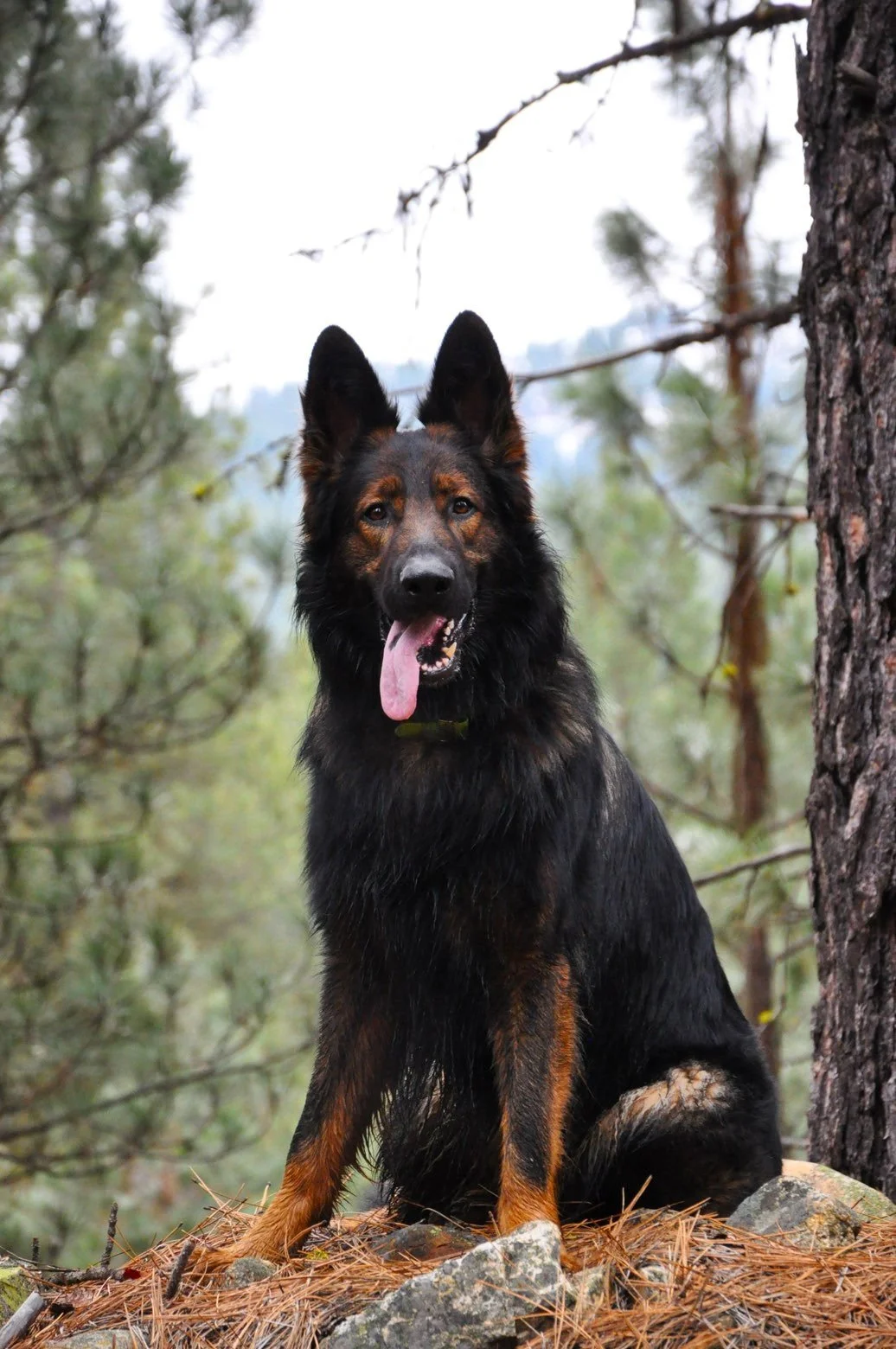
1,000+
Dogs. One
Consistent
Truth.
THE TRAINERS BEHIND
THE METHOD
Every trainer at Scentsible K9 works within the same framework, because consistent results require a consistent approach.
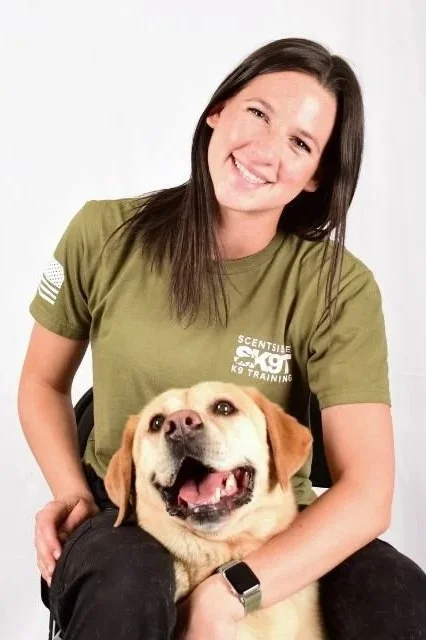
Kelty didn't set out to build a dog training business. She set out to find what actually worked.
She spent years working every corner of the dog world. Daycares. Grooming shops. Search and rescue. Police K9 units. She trained under the best, studied every method, and watched what happened when dogs were pushed, corrected, and drilled into compliance.
And she kept seeing the same thing. Results that lasted a few weeks. Dogs that performed in training and fell apart at home. Owners who did everything right and still felt like they were failing.
So she kept looking. And one truth kept proving itself over and over: the most permanent results always came from the relationship. Not the correction. Not the command. The relationship. That's what The Scentsible Method is built on.
Credentials
- BS Psychology, Boise State University
- Certified Police K9 Handler, Narcotics Detection
- AKC Canine Good Citizen Evaluator
- Volunteer, National Disaster Search Dog Foundation
- Scent Work Instructor, NACSW / K9 Nose Work
- Certified E-Collar Training, Paraclete K9
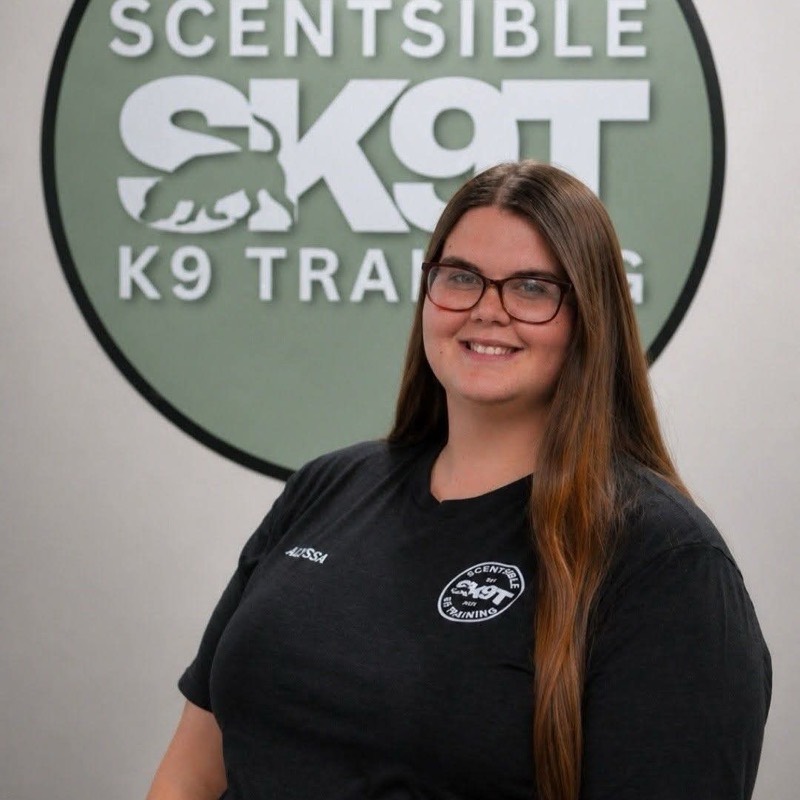
Alyssa didn't grow up around dogs, she grew up with them. Her household has always been full of them, and more often than not, they're German Shepherds. She's spent her life learning to read the breed from the inside out, which means she brings a level of instinctive fluency to her sessions that's hard to teach.
With experience in AKC evaluations and a deep passion for scent detection and barn hunt, her sessions are focused, upbeat, and built around what each dog is actually telling her. She knows dogs better than most people know people, and it shows.
She doesn't shy away from the dogs other trainers find intimidating. High-drive shepherds, reactive mixes, dogs with too much engine and not enough outlet, those are her people. She knows what it takes to channel that energy, and she knows when to step back and let a dog be exactly what they are.
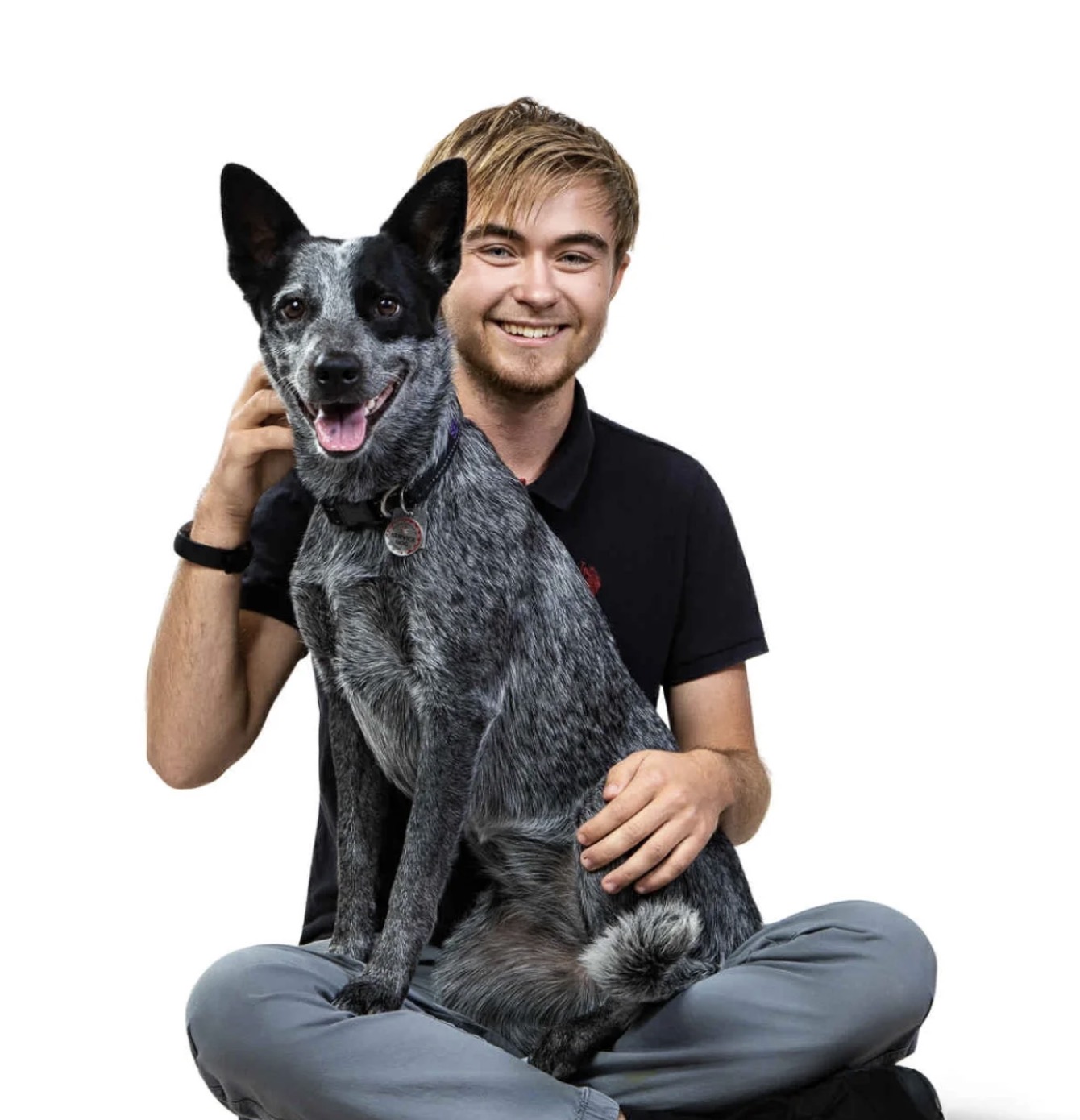
Neo is a translator. His whole approach starts from the idea that a dog who is struggling is communicating, not misbehaving, and that big emotions are not the same thing as bad behavior. Where another trainer hears stubborn, he hears a question the dog has not been given an answer to yet.
He works through positive, game based training, because games build confidence faster than pressure ever has. His pace is deliberate. Slow is fast, so he starts easier than most owners expect and builds from there, and he explains the why of every step so the person on the other end of the leash can keep doing it after he leaves.
The rule he does not bend is the one about listening. If a dog says they are done, the session changes. He also leads our dog acting work, building the tricks, focus, and confidence that let a good family dog work on cue in front of an audience.
"When your dog tells you something, believe them."
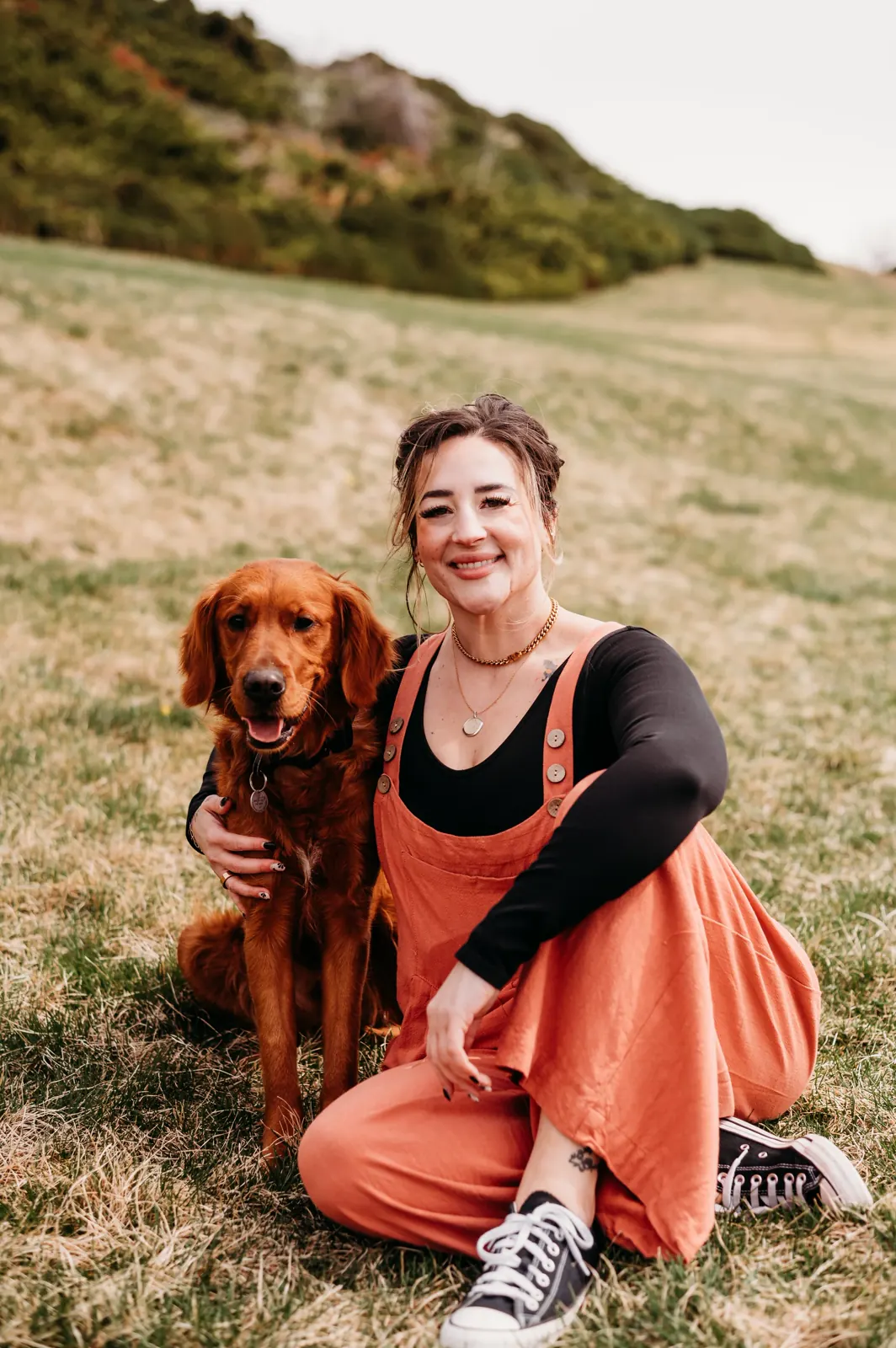
Shana spent 9 years as a lead medical assistant, learning to read the small signs most people miss: the shallow breath, the tight jaw, the way fear shows up in a body before it ever shows up in words. That skill never left her. It just found a new application.
The shift came at home. Her own dog, Remi, was struggling with anxiety and fear based reactivity, and traditional training wasn't moving the needle. When Shana started focusing on nervous system regulation instead, the same principles she'd spent years applying in high stress medical settings, everything changed. Faster than she expected, deeper than she thought possible. That's when she knew this was the work.
Today Shana leads operations at Scentsible K9, managing the team and the leads that come through the door with the same steady, clear headed presence she brings to a session. She teaches owners how to regulate their own nervous systems first, because a dog can't settle when the person holding the leash is wound tight. Her approach, whether she's running the business or working with a client, is calm, deliberate, and rooted in a quiet conviction: fear is information, not failure. She's here for both ends of the leash, the dog who's scared, and the human who's exhausted from trying everything.
Want to join our team? Contact us
Graduations
REAL CLIENTS.
REAL CERTIFICATES.


Every one of these is a Scentsible K9 client at the end of their program. Nothing staged, nobody paid, no stock photos.
Out in the Community
WHERE YOU WILL
ACTUALLY FIND US


Booths, pack walks, community events. If you want to meet us before you book anything, that is the easiest way to do it.
Out in the Real World
TRAINING THAT HOLDS
WHERE LIFE HAPPENS


Rivers, sidewalks, hardware store aisles, other dogs nearby. Real clients in real places, not a quiet training room.