GIVE YOUR DOG
A JOB.
WATCH BEHAVIOR CHANGE.
Scent detection taps into your dog's strongest instinct (their nose) to create purpose, focus, and calm. For under-fulfilled dogs, it's a game changer.
PURPOSEFUL MENTAL WORK THAT CHANGES BEHAVIOR.
Scent detection (also called nose work) teaches dogs to use their strongest sense (their nose) to search for and locate specific odors. It's not just a fun trick. It's purposeful mental work that helps dogs regulate, focus, and build genuine confidence.
For many dogs, five minutes of scent work does more for behavior than an hour of unfocused exercise.
"When dogs have a job, behavior starts to make sense."
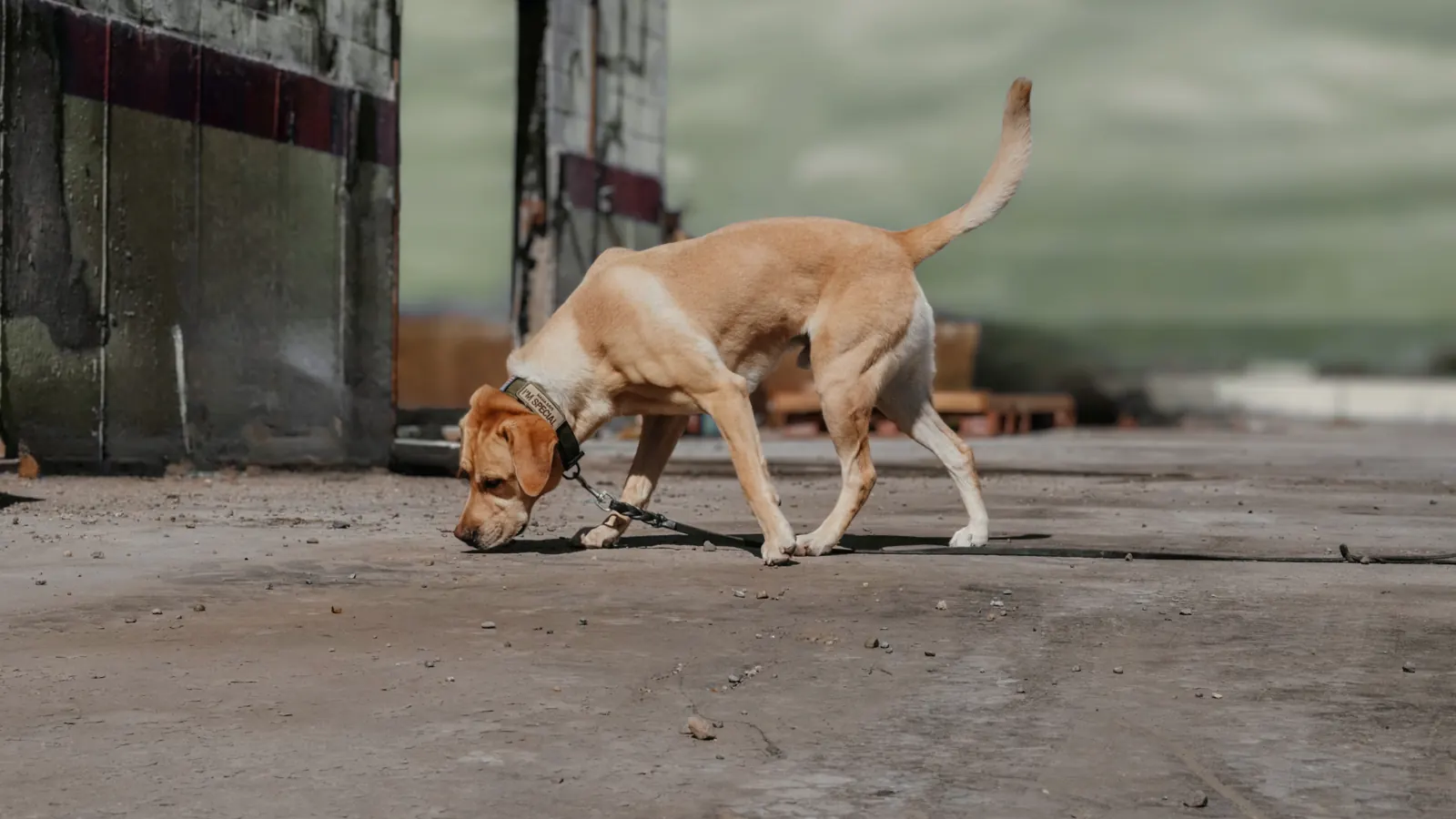
Every dog needs a job.
All dogs need a job to fulfill their natural instincts. Scent detection is the easiest one for the average dog owner to give them.
Why obedience alone falls short
Obedience is important. It is not the whole picture. The root issue for most struggling dogs is that they do not feel safe in the human world.
Obedience manages behavior on the surface. Scent work reaches the nervous system underneath it.
Manages what you see. Sit, stay, heel.
Changes what the dog feels. Calm, focus, confidence.
Sniffing regulates
Sniffing is a naturally calming act. Slow, focused scenting lowers a dog's heart rate and moves them out of fight or flight into a calm, focused state.
We are not teaching a trick. We are changing the dog's body chemistry. This is the heart of The Scentsible Method.
IS YOUR DOG UNDER-FULFILLED?
You might notice some of these signs.
Destructive at Home
Chewing, digging, or getting into things, not out of spite, out of boredom.
Constant Barking
Barking at sounds, out the window, or seemingly at nothing, looking for stimulation.
Never Seems Tired
Even after long walks and play sessions, still restless, pacing, or demanding attention.
High Drive or Working Breed
Built to work but living as a pet with no outlet for their instincts.
Anxious When Bored
Stress and anxiety that gets worse when nothing is happening: they need a job.
Any Age or Breed
Scent work is great for puppies, seniors, reactive dogs, and dogs recovering from injury.
WHAT SCENT DETECTION BUILDS
- How to search independently and problem-solve
- How to stay calm and focused under mental challenge
- How to work through uncertainty confidently
- How to succeed and build drive in new environments
- How to read your dog's body language and signals
- How to support calm, focused independent work
- How to provide enrichment that actually helps behavior
- How to meet your dog's needs sustainably
Your dog was built to hunt with their nose.
Humans have about 6 million. That is roughly fifty times more.
Two pathways
When a dog breathes in, the air splits. Part goes to the lungs. Part goes to a separate scenting area. They breathe and smell at the same time, without stopping.
Side slits
When a dog breathes out, the air leaves through slits on the sides of the nose. The exhale never blows away the scent they are working.
Stereo smelling
Each nostril works on its own. That lets a dog tell which direction a smell is coming from.
A second sense
Jacobson's organ sits just above the roof of the mouth. It reads pheromones and chemical signals, a layer of information humans cannot access.
Scent is a cloud, not a dot.
Odor is made of tiny particles that evaporate off a source and drift into the air. Trainers call them VOCs, volatile organic compounds. Your dog is not smelling the object. They are smelling the cloud around it.
That cloud spreads out like a cone. It is strong at the source and faint at the edges. Watch your dog work the edges inward until they hit the strongest spot.
Air is invisible water
Odor drifts with the air, swirls around corners and gets trapped in pockets. Cool air sinks and pools in low spots. Warm air carries it up.
Weather changes the search
Temperature and humidity change how far and how fast odor travels. The same hide can smell different at noon than at dusk.
What we teach you to see.
Five simple ideas that change how you watch your dog work.
- Scent is a cloud, not a dot
Your dog is working a spreading cloud, so the search will curve and circle before it lands.
- Air is invisible water
Odor flows, pools and gets stuck. If your dog is stuck in a corner, the smell probably is too.
- Scent equals reward
We pair the target smell with something your dog loves until finding it feels like a win.
- Sniffing regulates
Every search is a calming exercise in disguise. A sniffing dog is a dog settling down.
- Trust the dog's nose
Your job is to stay quiet and follow. The dog knows where the smell is before you do.
Scent detection is where it starts. It is the entry point into dog sports and drive fulfillment, and for most dogs, it is where behavior problems begin to melt.
TWO WAYS TO DO SCENT WORK WITH US
Group Classes
Join our Intro to Scent Work or Intro to Odor group classes. 6-week sessions, small groups, structured progression.
- ·Intro to Scent Work: $275
- ·Intro to Odor: $325
- ·Advanced Odor Detection: $350
Private Lessons
Work one-on-one with a trainer to integrate scent work into a broader behavior plan for your dog.
- ·Personalized plan for your dog
- ·Scent work integrated with behavior work
- ·Start with a $100 consultation