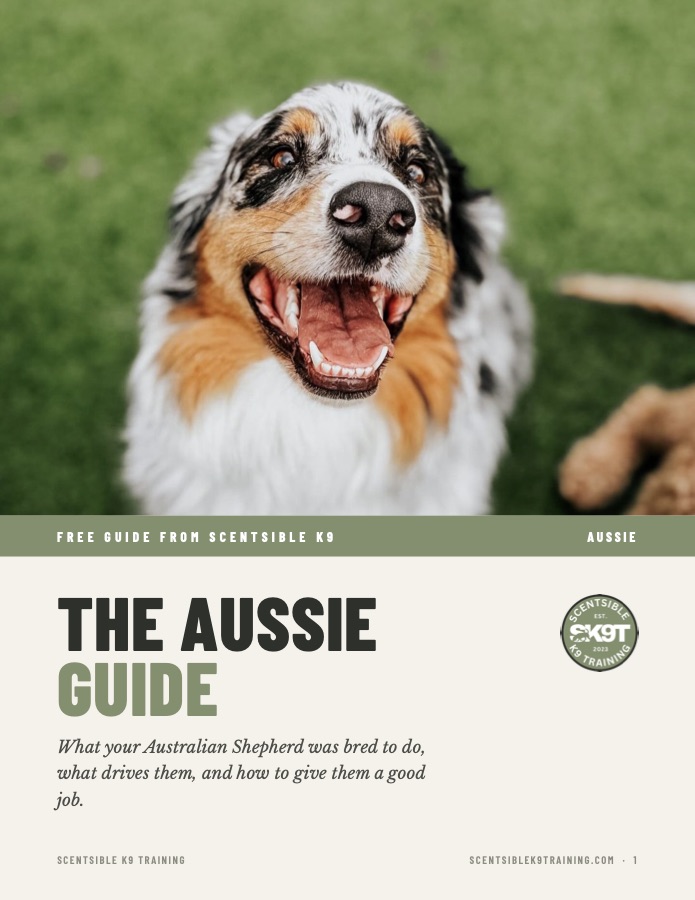
Where the Australian Shepherd came from
Despite the name, the Australian Shepherd was developed in the western United States. Ranchers wanted a tough herding dog that could handle cattle and sheep on big open land. One common account says the name comes from Basque shepherds who reached the US from Australia with their sheep and dogs, but breed historians treat that story with caution.
The breed grew on western ranches and became widely known in the mid 1900s through rodeo performer Jay Sisler, who showed his Aussies at rodeos across the West. The Australian Shepherd Club of America formed in 1957.
The AKC recognized the breed in 1991. Today Aussies work ranches, compete in many sports and live as active family dogs.
- 1800s Sheep and dogs arrive in the American West, in a story often linked to Basque shepherds
- Mid 1900s Jay Sisler's rodeo shows make the breed famous
- 1957 The Australian Shepherd Club of America is founded
- 1991 AKC recognizes the Australian Shepherd
The job a Australian Shepherd was bred for
On ranches these dogs moved cattle and sheep all day, covering ground fast and watching the stock closely. At home that shows up as herding kids, nipping at heels, and a need to stay busy and close to their people.
What you see at home
Bonded to one person and watchful of strangers. Herds the family, is very vocal, and needs to stay busy.
Circling and nipping heels
That is herding. Teach a gentle mouth, reward calm, and give the drive a real job.
Barking at everything
They watch closely and speak up. Reward quiet looks and give them a task.
Wary of strangers
Many Aussies bond to one person. Let them watch new people from a distance, at their own pace.
Inventing games
A bored Aussie makes their own work. Add short, varied training and a daily nose job.
Sports that fit a Australian Shepherd
- Herding. Their original work, with strong eye and balance
- Agility. Fast, athletic and eager to work as a team
- Disc. Love chasing and have the stamina for it
- Scent work. A low-impact job for an active mind
- Trick dog. Quick to learn and happy to show off
Training tips for a Australian Shepherd
- Keep sessions short and varied, since bored Aussies invent their own games.
- Reward calm behavior around motion, then use movement as a reward for good choices.
- Teach a gentle mouth and a solid recall early, with great treats.
- Give a daily job that uses the nose and brain, not just running.
Body and health
Medium size and athletic, but some carry the merle gene, and two merle parents can produce health problems. Warm up before jumping sports.
Fun fact. Some Aussies are born with a naturally short tail, and a few are born with almost no tail at all.
Breed is where we start
A study of more than 18,000 dogs found breed explains only about 9 percent of the differences in behavior between dogs (Morrill and others, Science, 2022). So your Australian Shepherd is a starting guess, not a label. We find the drive your dog actually runs on, give it a job, and teach you to read them.
Looking for a different breed? See what 75 breeds were bred to do.