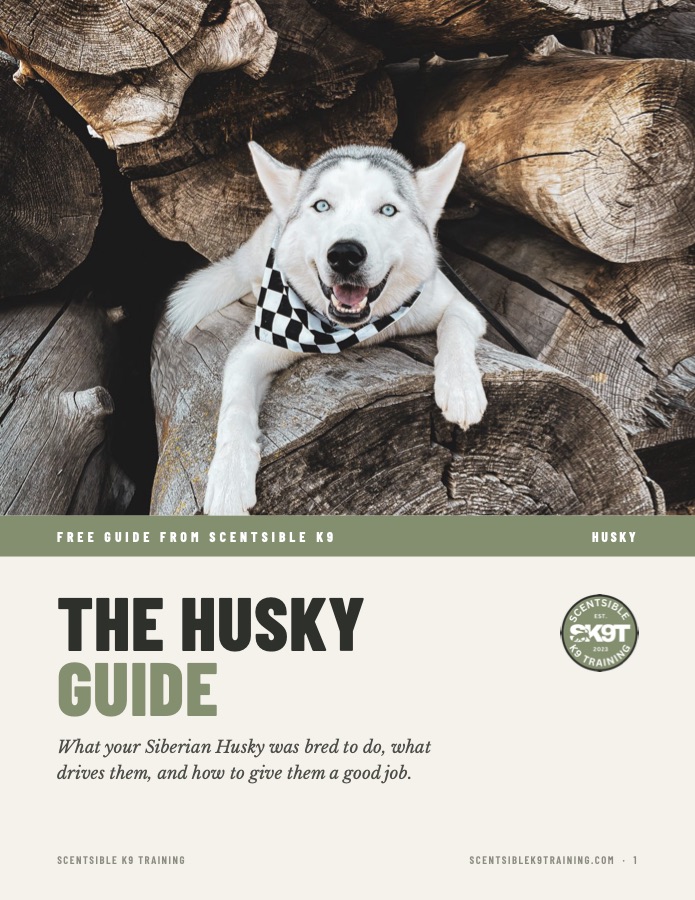
Where the Siberian Husky came from
The Siberian Husky was developed by the Chukchi people of far northeastern Siberia. They needed dogs that could pull light loads quickly over long distances in extreme cold, while eating very little. The dogs also lived inside homes with families.
A Russian fur trader named William Goosak brought Siberian dogs to Nome, Alaska, in 1908. They soon did very well in the All Alaska Sweepstakes sled race. In 1925, a relay of sled dog teams carried diphtheria serum to Nome. Leonhard Seppala's Togo ran the longest and hardest leg, and Gunnar Kaasen's Balto ran the final leg.
The AKC recognized the Siberian Husky in 1930. Today they are family pets and sled racing dogs.
- 1908 Siberian dogs arrive in Nome, Alaska
- 1925 A relay of sled dog teams carries diphtheria serum to Nome
- 1930 The AKC recognizes the Siberian Husky
The job a Siberian Husky was bred for
The work was pulling a light sled for many miles, often in a team, with little food. The dog needed stamina, a good coat and a steady pace. At home that shows up as a dog who loves to run, is friendly, escapes fences, and howls rather than barks.
What you see at home
Loves to run and loves people. Escapes fences, howls instead of barking, and may chase small animals. Overheats faster than they let on.
Escaping the yard
A dog bred to cover miles gets bored behind a fence. Add exercise, sniff games and a fence they cannot dig or climb.
Howling
Huskies talk with their voice. It often means energy or loneliness, so exercise and company help most.
Not coming back
Recall is a long project for this breed. Use a long line and pay big for every return.
Pulling on leash
They were built to pull. Teach harness and leash manners early and reward a loose leash.
Sports that fit a Siberian Husky
- Canicross. Running with you is what they love.
- Bikejoring. A fast way to burn energy.
- Carting. They like pulling and working as a team.
- Scent work. A calmer outlet for a busy brain.
Training tips for a Siberian Husky
- Never trust off-leash recall. Practice on a long line.
- Keep sessions short and exciting. They get bored with repeating.
- Teach harness and leash manners early so you do not get pulled.
- Give them a lot of daily exercise and training games.
Body and health
Huskies have a thick double coat, so they overheat easily. Do hard exercise in the cool of the day, and watch for eye and hip problems.
Fun fact. The AKC standard allows Husky eyes to be brown, blue, or one of each.
Breed is where we start
A study of more than 18,000 dogs found breed explains only about 9 percent of the differences in behavior between dogs (Morrill and others, Science, 2022). So your Siberian Husky is a starting guess, not a label. We find the drive your dog actually runs on, give it a job, and teach you to read them.
Looking for a different breed? See what 75 breeds were bred to do.