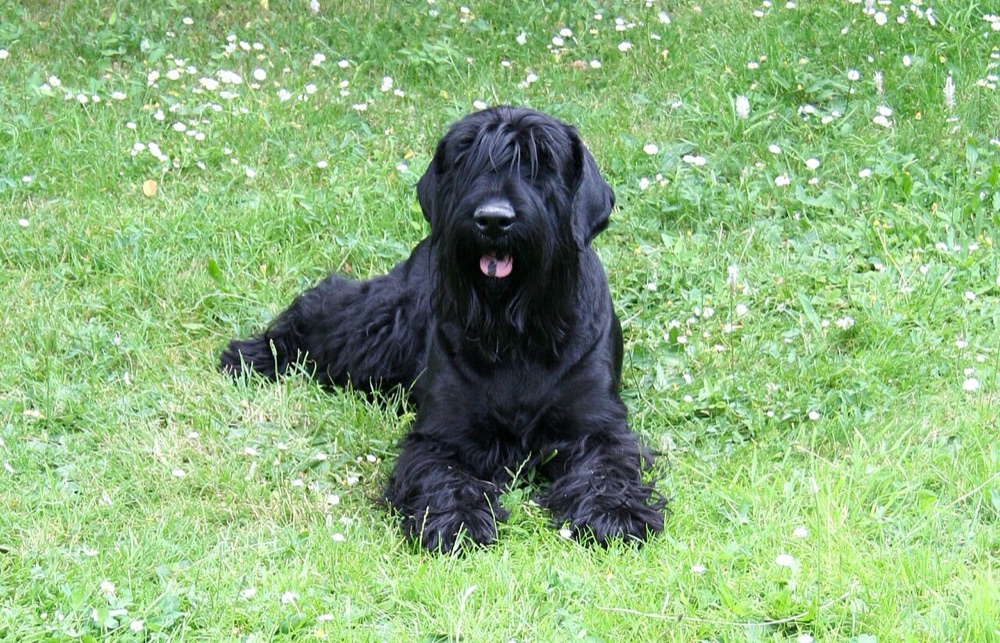

Where the Black Russian Terrier came from
The Black Russian Terrier was created in the Soviet Union after World War II. The Red Star Kennel in Moscow, run by the state, bred it as a military and working dog. Breeders used Giant Schnauzers, Airedale Terriers, Rottweilers, Newfoundlands and other breeds. Many of the dogs came from countries where the Red Army had been active, especially East Germany.
Despite the name, it is not a true terrier. The first working examples were shown in Moscow in 1955, and the first breed standard was published in 1958. Until 1957, only the state kennel bred them, and then puppies went to civilian breeders who started breeding for looks as well as work.
The breed spread to Europe and then to the United States and other countries. The FCI adopted a standard in 1984, and the AKC recognized the Black Russian Terrier in 2004. Today they are large, confident working dogs and family guardians.
- 1955 The first working examples are shown at an exhibition in Moscow
- 1957 Puppies from the Red Star Kennel are sold to civilian breeders
- 1958 The first breed standard is published
- 1984 The FCI adopts the breed standard
- 2004 AKC recognizes the Black Russian Terrier
The job a Black Russian Terrier was bred for
The breed was made to be a tough working dog for the state, doing guard and service work in cold weather. That means a dog who is smart, serious, protective and happiest with a task. At home that shows up as a watchful dog who is wary of strangers and gets restless without a job.
What you may see at home
Watchful, serious, protective, smart, needs a daily job.
Give them: Obedience, scent work, tracking, and calm exposure to people.
Sports that fit a Black Russian Terrier
- Obedience. Smart and serious about work
- Scent work. A great focused job for a thinking dog
- Tracking. Uses their nose in a calm, steady way
- Rally. Strong teamwork with their handler
- Carting. Draws on their strength and work drive
Training tips for a Black Russian Terrier
- Give a job every day. Train, play and use puzzles so the mind is tired, not only the body.
- Socialize widely at a young age, and reward calm, neutral behavior around strangers.
- Teach a calm greeting and a place cue so visitors are managed without stress.
- Keep training fair and clear. They are sensitive to harsh handling and respond to reward.
Body and health
Large, deep chested dogs risk bloat, so feed smaller meals and avoid hard exercise around meals. Hip and elbow problems are a concern in large breeds. The low shedding coat needs regular brushing and trimming.
Fun fact. The Black Russian Terrier was bred by a Soviet state kennel called Red Star, and it was only in 1957 that puppies were sold to civilian breeders.
Breed is where we start
A study of more than 18,000 dogs found breed explains only about 9 percent of the differences in behavior between dogs (Morrill and others, Science, 2022). So your Black Russian Terrier is a starting guess, not a label. We find the drive your dog actually runs on, give it a job, and teach you to read them.
Free tools for your dog
- Breed drive calculatorMixed breed? Add the other breeds and see the drives your dog was bred with.
- Dog breed quizTen photos, four names each. The same quiz our trainers take.
- Dog drive testAnswer everyday moments and find the job your dog runs on.
Looking for a different breed? See what 137 breeds were bred to do, and download any of their guides.