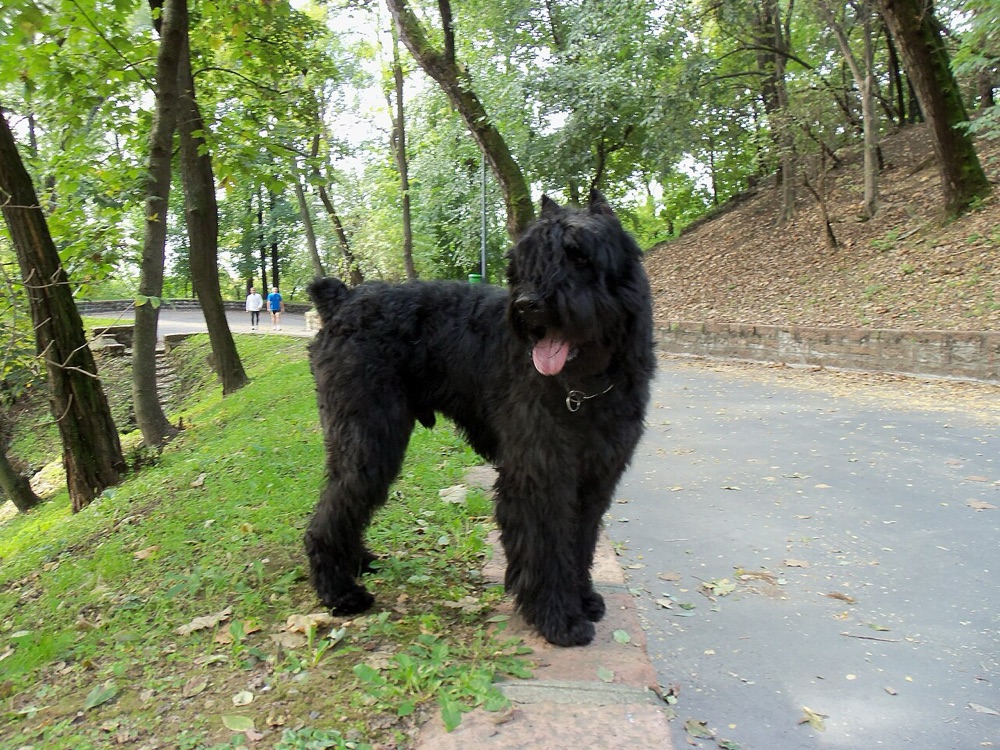

Where the Bouvier des Flandres came from
The Bouvier des Flandres comes from Flanders, in Belgium and northern France. The name means cow herder of Flanders. Farmers used them for droving cattle, pulling carts and general farm work. Monks at the Ter Duinen monastery are said to have bred some early Bouviers.
Before the 1900s the breed was not well defined. Local clubs wrote different standards in 1912 and 1913. World War I nearly wiped the breed out because the region was ruined and many dogs served in the war. A dog named Nic, trained as a trench dog, is seen as a founder of the modern breed.
A joint French and Belgian committee wrote a shared standard in 1936. The AKC recognized the breed in 1931. Today they are used as guard dogs, police dogs and family pets.
- 1912 Local Belgian clubs begin to write standards for the Bouvier
- 1931 AKC recognizes the Bouvier des Flandres
- 1936 A joint French and Belgian committee writes a standard
- 1965 The FCI breed standard is adopted
The job a Bouvier des Flandres was bred for
A farm dog that drove cattle to market, pulled carts and kept watch. That is why many Bouviers are serious, protective and slow to warm up. They herd by bumping and body blocking, and they tend to guard the family.
What you may see at home
Serious, protective, aloof with strangers, steady and strong, slow to mature.
Give them: Early socializing, obedience with variety, tracking or carting, and a calm place to watch from.
Sports that fit a Bouvier des Flandres
- Herding. Steady cattle work is what they were built for
- Obedience. Smart, but they dislike endless repeats
- Carting. A real farm job for a strong dog
- Tracking. A calm and steady way to work the nose
- Agility. Possible for a fit adult with careful jumps
Training tips for a Bouvier des Flandres
- Socialize early and often with calm, positive meetings. Strangers are not their favorite.
- Keep sessions short and varied. They get bored with too much repeating.
- Use clear, fair rules. Pushy training can make a strong guard dog tense.
- Teach a settle and leave it for visitors and the door.
Body and health
Large and deep chested, so bloat is a concern. Hip dysplasia and eye issues can occur. The thick beard and coat mat easily and need regular brushing and trimming.
Fun fact. One of the breed's old names is Vuilbaard, which means dirty beard in Dutch.
Breed is where we start
A study of more than 18,000 dogs found breed explains only about 9 percent of the differences in behavior between dogs (Morrill and others, Science, 2022). So your Bouvier des Flandres is a starting guess, not a label. We find the drive your dog actually runs on, give it a job, and teach you to read them.
Free tools for your dog
- Breed drive calculatorMixed breed? Add the other breeds and see the drives your dog was bred with.
- Dog breed quizTen photos, four names each. The same quiz our trainers take.
- Dog drive testAnswer everyday moments and find the job your dog runs on.
Looking for a different breed? See what 137 breeds were bred to do, and download any of their guides.