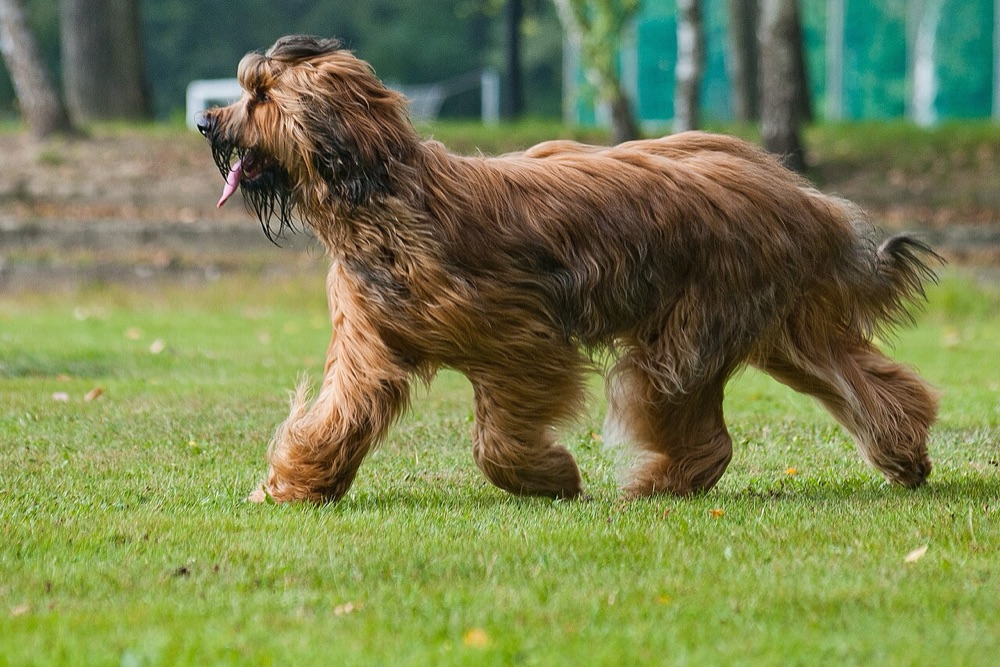

Where the Briard came from
The Briard comes from the Brie region of north central France. Shepherds used them to herd sheep and to guard them. The first written mention of the shepherd dogs of Brie is from 1783, when Rozier described the long-haired chien de Brie.
The breed was first shown at the first Paris dog show in 1863. The first Briard in the national stud book was Sans Gene, in 1885. A breed standard was written in 1897, and a breed society called Les Amis du Briard formed in 1909. World War I and World War II both caused sharp drops in numbers.
The AKC recognized the Briard in 1928. Most Briards today are family dogs. They are loyal and watchful, and the herding and guarding drive still shows.
- 1783 Rozier writes about the long-haired chien de Brie
- 1863 The breed is shown at the first Paris dog show
- 1897 The first breed standard is drawn up
- 1928 AKC recognizes the Briard
The job a Briard was bred for
A shepherd dog that moved sheep and guarded them from threats. Many Briards herd family members, watch the yard and bark at things they find odd. They are loyal and often aloof with strangers.
What you may see at home
Loyal, watchful, herds the family, aloof with strangers, barks at odd things.
Give them: Socializing, herding games, a settle on a mat, and fair, patient training.
Sports that fit a Briard
- Herding. The original job, and they can still do it
- Obedience. Smart, but they want a reason to work
- Agility. Fun for a fit adult with good footing
- Tracking. A steady, thoughtful way to use the nose
- Fast CAT. A short sprint for a big, athletic dog
Training tips for a Briard
- Start socializing in puppyhood and keep it up for life. Strangers are a big topic.
- Reward calm checking of the door and then a settle on a mat.
- Use fair, patient training. They remember harsh handling.
- Practice recall in safe places. Herding dogs like to decide when to come back.
Body and health
Large and deep chested, so bloat is a concern. Hip dysplasia occurs, and a few eye diseases have been found in the breed. The long, goat-like coat needs regular brushing.
Fun fact. Briards have double dewclaws on the back legs, and a standard dog is expected to have them.
Breed is where we start
A study of more than 18,000 dogs found breed explains only about 9 percent of the differences in behavior between dogs (Morrill and others, Science, 2022). So your Briard is a starting guess, not a label. We find the drive your dog actually runs on, give it a job, and teach you to read them.
Free tools for your dog
- Breed drive calculatorMixed breed? Add the other breeds and see the drives your dog was bred with.
- Dog breed quizTen photos, four names each. The same quiz our trainers take.
- Dog drive testAnswer everyday moments and find the job your dog runs on.
Looking for a different breed? See what 137 breeds were bred to do, and download any of their guides.