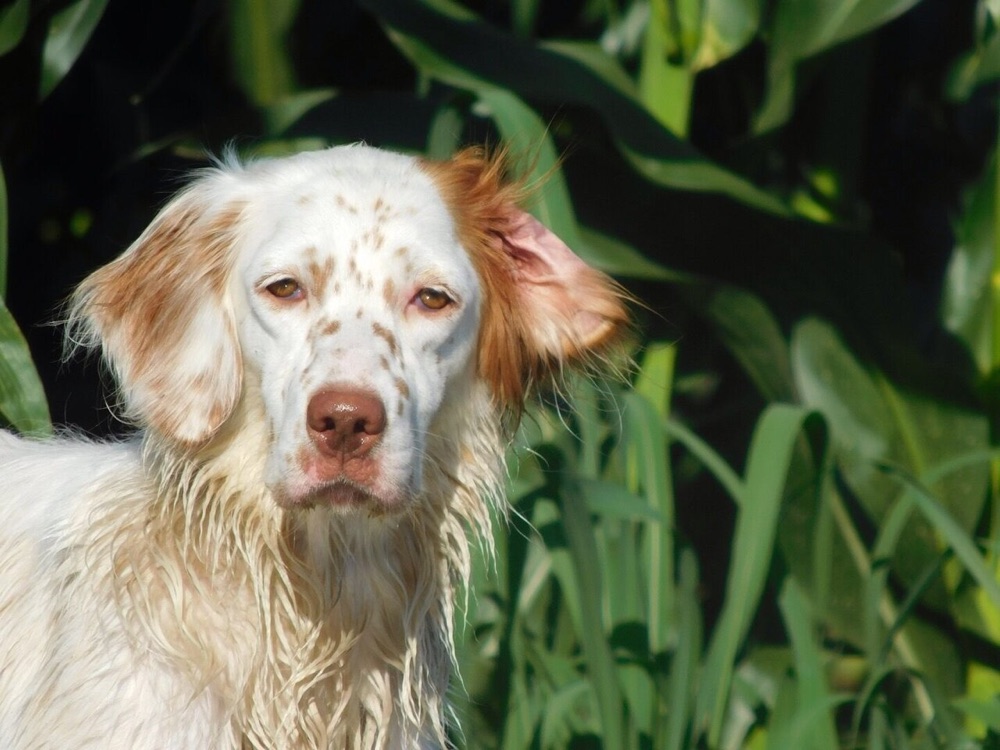

Where the English Setter came from
The English Setter was bred in England to find game birds and show the hunter where they were. Writers described a bird dog called a setter as far back as 1576. Early setters were most likely developed from spaniel types, with other pointing dogs in the mix.
The modern look owes a lot to two Englishmen. Edward Laverack (1800 to 1877) built a strain through careful breeding. Richard Purcell Llewellin (1840 to 1925) then crossed Laverack's best dogs with other lines. Laverack also coined the word "belton," the term for the speckled flecking in the coat.
The AKC recognized the English Setter in 1878. Today there are show-bred dogs with long, flowing coats and field-bred dogs with finer builds and less coat. Both are gentle and people-loving.
- 1576 Dr. Johannes Caius writes about the setter, called "index," in his book on British dogs
- 1800s Edward Laverack develops his famous strain in England
- 1878 AKC recognizes the English Setter
- Late 1800s Richard Llewellin builds a second famous strain from Laverack's dogs
The job an English Setter was bred for
Setters work in wide, steady patterns, nose up, searching for bird scent in the air. When they find it, they freeze to point. That is why English Setters love to roam and sniff, and why a squirrel can erase your voice. Indoors, they are often mellow couch partners.
What you may see at home
Gentle and friendly, but wanders after scents, gets bouncy with guests, and can be sensitive to scolding.
Give them: Sniff walks, find-it games, scent work, and calm greeting practice with rewards.
Sports that fit an English Setter
- Hunt tests. Their natural job: search, point and stay steady
- Scent work. Lets a nose-driven dog use their best skill
- Fast CAT. A safe place to run fast
- Agility. Fun and athletic when kept positive
- Rally. Gentle, relaxed obedience for a sensitive dog
Training tips for an English Setter
- Use positive reinforcement only. English Setters can be sensitive to harsh corrections.
- Build recall on a long line, and pay big when they turn back from a scent.
- Teach a calm greeting. This breed adores visitors and can get bouncy.
- Give a daily outlet for the nose, such as scatter feeding or find-it games.
Body and health
Active and long-legged. Some lines are prone to ear and skin problems, and deafness is known in the breed, so ask breeders about hearing tests. The feathering needs regular brushing.
Fun fact. Laverack coined the word "belton" for the speckled coat. It is also the name of a village in northern England.
Breed is where we start
A study of more than 18,000 dogs found breed explains only about 9 percent of the differences in behavior between dogs (Morrill and others, Science, 2022). So your English Setter is a starting guess, not a label. We find the drive your dog actually runs on, give it a job, and teach you to read them.
Free tools for your dog
- Breed drive calculatorMixed breed? Add the other breeds and see the drives your dog was bred with.
- Dog breed quizTen photos, four names each. The same quiz our trainers take.
- Dog drive testAnswer everyday moments and find the job your dog runs on.
Looking for a different breed? See what 137 breeds were bred to do, and download any of their guides.