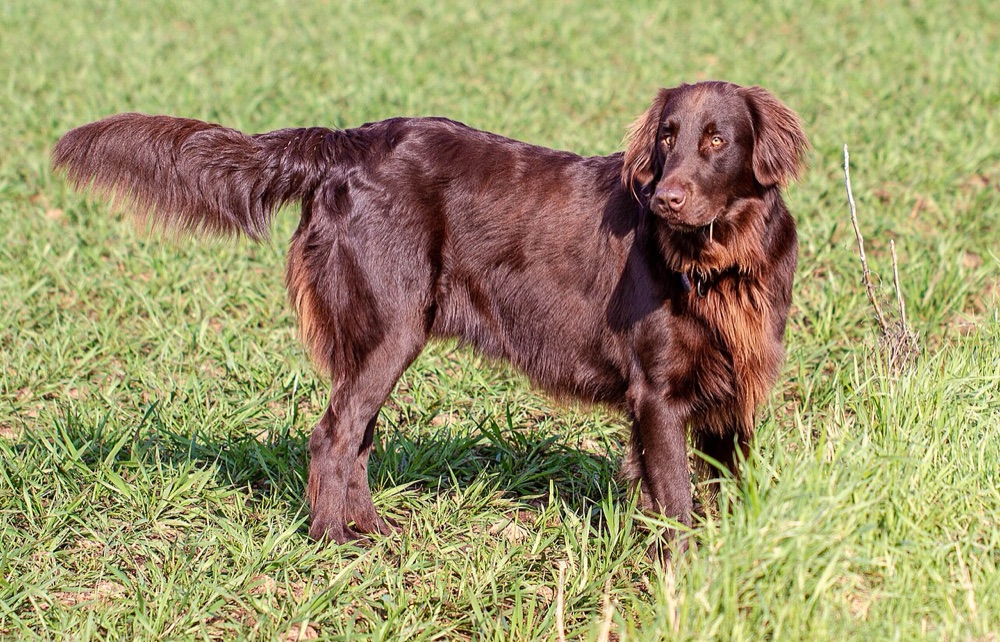

Where the Flat-Coated Retriever came from
The Flat-Coated Retriever was developed in England in the middle of the 1800s as a gamekeeper's dog. They retrieve birds on land and in water. The first dogs of the breed appeared around 1860, and the type was settled about twenty years later.
Their ancestry is thought to include the Newfoundland for strength and setters for scenting, and some accounts add collie types. Part of the story is unverified. The Golden Retriever was bred in part from Flat-Coated Retrievers.
The AKC recognized the breed in 1915. Their numbers fell after the Golden and Labrador took over, and by the end of World War II the breed was in trouble. Careful breeding from the 1960s brought them back. They are often called the Peter Pan of retrievers because they stay playful for so long.
- About 1860 The first dogs of the breed appear in England
- 1915 AKC recognizes the Flat-Coated Retriever
- 1980 Ch. Shargleam Blackcap wins Best in Show at Crufts
- 2011 Vbos The Kentuckian wins Best in Show at Crufts
The job a Flat-Coated Retriever was bred for
They retrieved shot birds from fields and water for hours, so they love to carry things and use their mouths. That is why many Flat-Coats grab socks, carry toys and greet with a wagging whole body. They need plenty of exercise and a job.
What you may see at home
Goofy, mouthy, never quite grows up, steals and carries things, loves everyone.
Give them: Retrieve games with rules, carry jobs, swimming, nose work, and calm greetings practice.
Sports that fit a Flat-Coated Retriever
- Hunt tests. Their original work on land and in water
- Dock diving. Loves water and retrieving
- Scent work. Gives a busy mind a job
- Agility. Fast, happy and eager to work as a team
- Rally. A fun way to build focus with a goofy dog
Training tips for a Flat-Coated Retriever
- Teach a calm out and drop it, and pay for it, since they love to carry things.
- Reward four paws on the floor for greetings. They are enthusiastic.
- Keep training fun and varied. Many mature slowly and stay playful.
- Give retrieves with rules, like sit first, then fetch.
Body and health
Medium to large with a flat, feathered coat. The breed is known to have a higher rate of some cancers, so regular vet checks matter. Keep them lean.
Fun fact. Flat-Coated Retrievers have won Best in Show at Crufts, the world's largest dog show, in 1980, 2011 and 2022.
Breed is where we start
A study of more than 18,000 dogs found breed explains only about 9 percent of the differences in behavior between dogs (Morrill and others, Science, 2022). So your Flat-Coated Retriever is a starting guess, not a label. We find the drive your dog actually runs on, give it a job, and teach you to read them.
Free tools for your dog
- Breed drive calculatorMixed breed? Add the other breeds and see the drives your dog was bred with.
- Dog breed quizTen photos, four names each. The same quiz our trainers take.
- Dog drive testAnswer everyday moments and find the job your dog runs on.
Looking for a different breed? See what 137 breeds were bred to do, and download any of their guides.