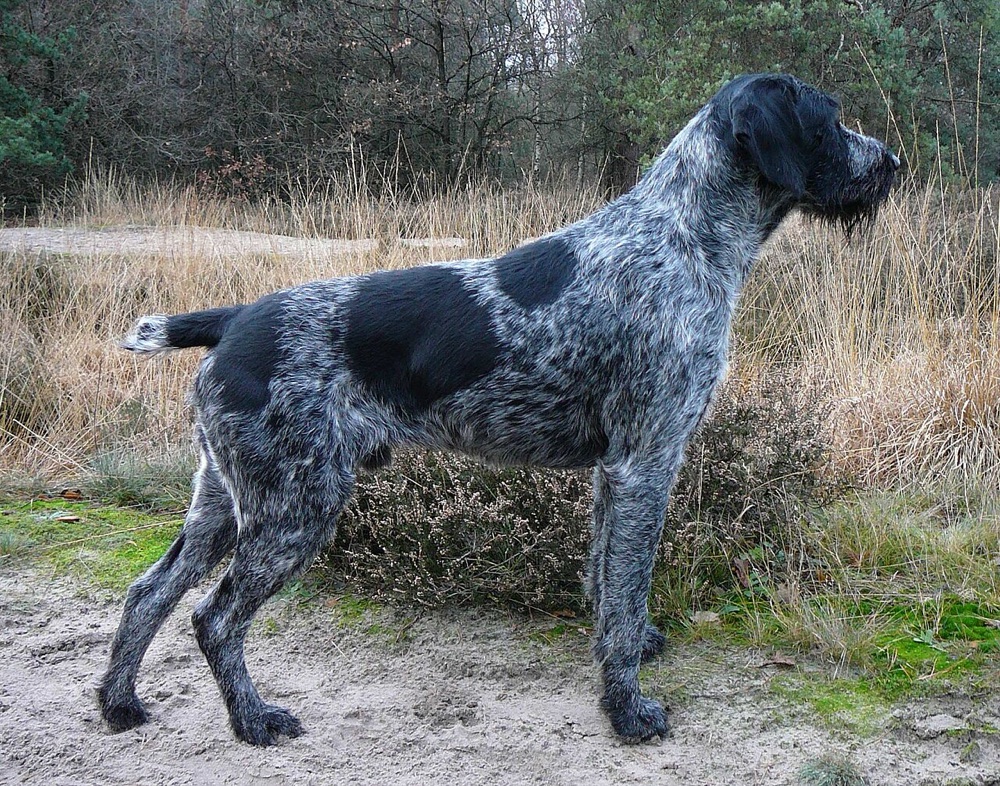

Where the German Wirehaired Pointer came from
The German Wirehaired Pointer, called the Deutsch Drahthaar in Germany, was developed in the late 1800s as an all-purpose hunting dog. Hunters wanted one dog that could point, track, and retrieve from land and water, with a rough coat to protect against brush and cold water. Sources differ on exactly which breeds went into it, but griffon and pointer types are often named.
Germany's breed club, the Verein Deutsch Drahthaar, was founded in 1902. The breed was fully accepted by the FCI, the international kennel group, in 1954.
The AKC recognized the German Wirehaired Pointer in 1959. Many are still bred for hunting, and they stay serious workers in family homes.
- 1902 The Verein Deutsch Drahthaar breed club is founded in Germany
- 1954 The FCI definitively accepts the Deutsch Drahthaar
- 1959 AKC recognizes the German Wirehaired Pointer
The job a German Wirehaired Pointer was bred for
A hunter's dog had to search, point, track a wounded bird, and retrieve, in any weather. That is why many GWPs have a strong nose, a hard-driving style, and a need for something to do every day. They also tend to bond closely to their person.
What you may see at home
Driven and focused, clingy, needs a job, strong on leash, can be sensitive to harsh handling.
Give them: Scent work, tracking games, retrieve, long line walks, and a daily job.
Sports that fit a German Wirehaired Pointer
- Hunt tests. Their original work, pointing and retrieving
- Tracking. A natural fit for a serious nose
- Scent work. Gives a busy dog a clear job
- Fast CAT. A safe outlet for chase drive
- Dock diving. Water retrieving was part of the breed's job
Training tips for a German Wirehaired Pointer
- Start early with calm manners. This breed is strong and busy.
- Use rewards and clear rules. They respond to fair training and can shut down with harsh methods.
- Give daily brain work, like find-it and retrieve games, along with exercise.
- Practice recall on a long line before off-leash freedom.
Body and health
Athletic and deep chested, so bloat is a concern. The harsh, wiry coat sheds little but needs brushing, and the ears and beard need cleaning.
Fun fact. In Germany, the Drahthaar made up about 4 percent of all new dog registrations from 2010 to 2024.
Breed is where we start
A study of more than 18,000 dogs found breed explains only about 9 percent of the differences in behavior between dogs (Morrill and others, Science, 2022). So your German Wirehaired Pointer is a starting guess, not a label. We find the drive your dog actually runs on, give it a job, and teach you to read them.
Free tools for your dog
- Breed drive calculatorMixed breed? Add the other breeds and see the drives your dog was bred with.
- Dog breed quizTen photos, four names each. The same quiz our trainers take.
- Dog drive testAnswer everyday moments and find the job your dog runs on.
Looking for a different breed? See what 137 breeds were bred to do, and download any of their guides.