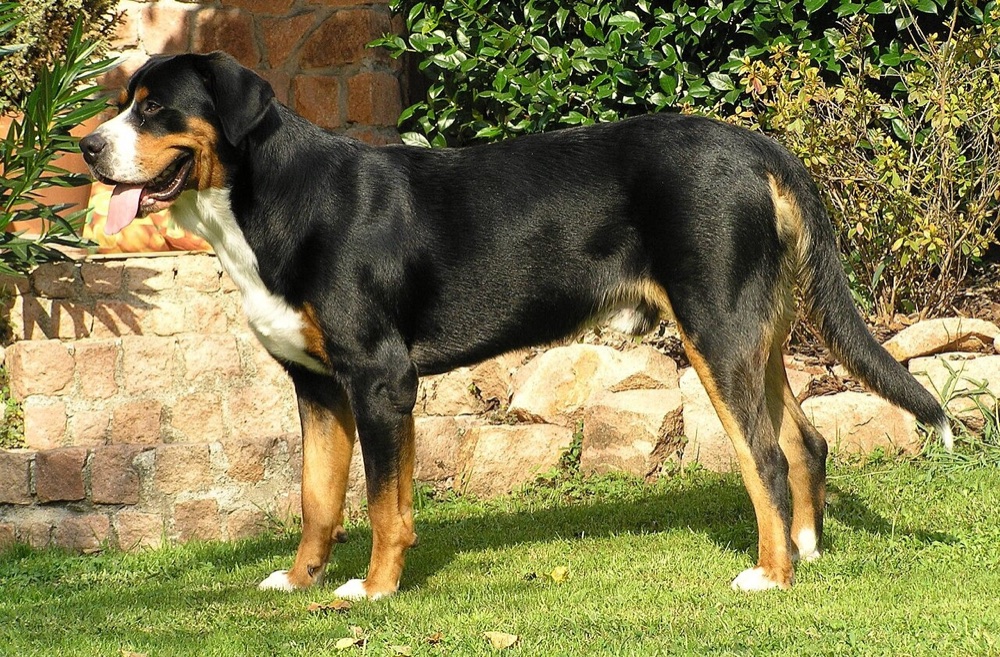

Where the Greater Swiss Mountain Dog came from
The Greater Swiss Mountain Dog comes from the Swiss Alps. They are one of four Swiss farm dog breeds called Sennenhunde. Farmers used them to pull carts, drive cattle and guard the farm, and the breed earned the nickname "the poor man's horse." Their exact origin is not known.
By the late 1800s, machines and other dogs were doing much of their work, and the breed was thought to be nearly gone. In 1908, a geology professor named Albert Heim, an expert on Swiss mountain dogs, saw short haired dogs that were shown to him as Bernese Mountain Dogs. He urged breeders to bring back the larger type, and the breed was re-established.
Greater Swiss Mountain Dogs were first imported to the United States in 1968. The AKC recognized the breed in 1995. Today they are strong, friendly family dogs who still love to pull.
- 1908 Albert Heim sees short haired Swiss dogs and helps revive the large Swiss mountain dog
- 1968 The breed is first imported to the United States
- 1995 AKC recognizes the Greater Swiss Mountain Dog
The job a Greater Swiss Mountain Dog was bred for
These were draft and drover dogs. They pulled loaded carts and moved cattle on steep ground, and they barked to warn of strangers. That is why many Swissies lean into the leash, pull hard, bark loudly at visitors and love having a job to carry or pull.
What you may see at home
Strong puller, barks at visitors, friendly, slow to mature.
Give them: Carting, weight pull, hiking, and loose leash training early.
Sports that fit a Greater Swiss Mountain Dog
- Carting. The classic job, and a good outlet for pulling
- Drafting. Hauling a load teaches them to work with a handler
- Weight pull. Builds strength with a safe harness
- Scent work. A quiet, calm way to use their brain
- Rally. Works well for a cooperative, food loving dog
Training tips for a Greater Swiss Mountain Dog
- Teach loose leash walking early, with a front clip harness. They are powerful pullers.
- Give a daily job like carrying a pack or pulling a cart, once joints have matured.
- Teach a quiet cue. Reward them for stopping after the first alert bark.
- Socialize widely as a puppy, since many are wary of strangers.
Body and health
Large, deep chested dogs can get bloat, so avoid hard exercise around meals. Growing joints need care: keep puppies lean and avoid hard jumping and long runs. Check the breed club for health testing.
Fun fact. The Greater Swiss Mountain Dog is nicknamed "the poor man's horse" because of how much draft work they did.
Breed is where we start
A study of more than 18,000 dogs found breed explains only about 9 percent of the differences in behavior between dogs (Morrill and others, Science, 2022). So your Greater Swiss Mountain Dog is a starting guess, not a label. We find the drive your dog actually runs on, give it a job, and teach you to read them.
Free tools for your dog
- Breed drive calculatorMixed breed? Add the other breeds and see the drives your dog was bred with.
- Dog breed quizTen photos, four names each. The same quiz our trainers take.
- Dog drive testAnswer everyday moments and find the job your dog runs on.
Looking for a different breed? See what 137 breeds were bred to do, and download any of their guides.