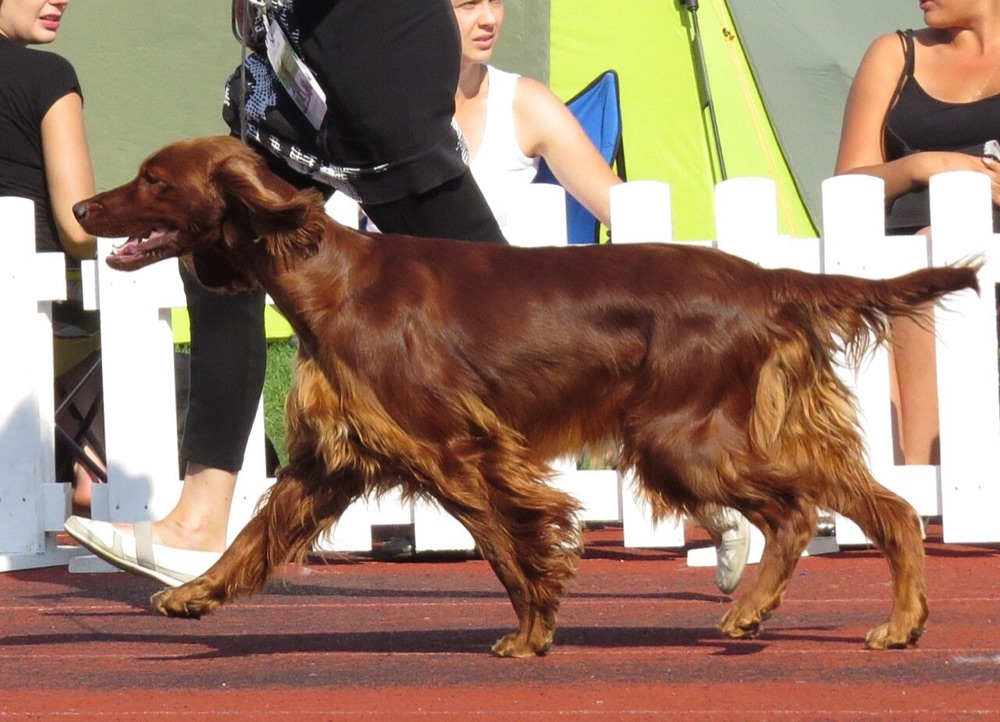

Where the Irish Setter came from
The Irish Setter comes from Ireland, where hunters wanted a fast dog that could find birds across open fields and bogs. Setters were first described in writing in the 1500s. Those early setting dogs were not the red dogs we know today, and many were red and white.
Irish families kept setter lines for generations. The de Freyne family of French Park began keeping detailed stud records in 1793. Over time, breeders favored the solid red coat. The Irish Red Setter Club in Dublin approved a breed standard in 1886, and it has changed little since.
The AKC recognized the Irish Setter in 1878. Today most are show-bred family dogs, while a smaller group of field-bred Red Setters still hunts. Both types are known for being friendly and full of fun.
- 1570 Dr. Johannes Caius describes a bird-finding "setter" in his book on British dogs
- 1793 The de Freyne family of French Park begins keeping detailed setter stud records
- 1878 AKC recognizes the Irish Setter
- 1886 The Irish Red Setter Club in Dublin approves the breed standard
The job an Irish Setter was bred for
Setters hunted upland birds by running wide, catching scent on the air, and then freezing to show the hunter where the birds were. That is why many Irish Setters run hard, follow their noses, and forget you exist when something smells good. They also need real daily exercise.
What you may see at home
Nonstop energy, pulls on leash, follows the nose, stays goofy and puppy-like for years.
Give them: Long line sniff walks, scent work, off-leash style play in a fenced area, and a daily settle on a mat.
Sports that fit an Irish Setter
- Hunt tests. Their original work: range, find birds and point
- Scent work. Gives a big nose a calm, focused job
- Fast CAT. A straight sprint that lets them run flat out
- Agility. Athletic and playful, if training stays upbeat
- Rally. Fun, relaxed obedience that keeps their attention on you
Training tips for an Irish Setter
- Practice recall on a long line before any off-leash freedom, since the nose can win.
- Keep sessions short, upbeat and full of play. Many setters stay puppy-like for years.
- Reward calm behavior in the house, and teach a settle on a mat.
- Pay well for check-ins on walks so looking back at you beats sniffing ahead.
Body and health
Deep chested and lean, so bloat is a concern. Feed smaller meals and avoid hard exercise right after eating. The long feathered coat and ears need regular brushing.
Fun fact. The AKC breed standard describes the Irish Setter as having a "rollicking personality."
Breed is where we start
A study of more than 18,000 dogs found breed explains only about 9 percent of the differences in behavior between dogs (Morrill and others, Science, 2022). So your Irish Setter is a starting guess, not a label. We find the drive your dog actually runs on, give it a job, and teach you to read them.
Free tools for your dog
- Breed drive calculatorMixed breed? Add the other breeds and see the drives your dog was bred with.
- Dog breed quizTen photos, four names each. The same quiz our trainers take.
- Dog drive testAnswer everyday moments and find the job your dog runs on.
Looking for a different breed? See what 137 breeds were bred to do, and download any of their guides.