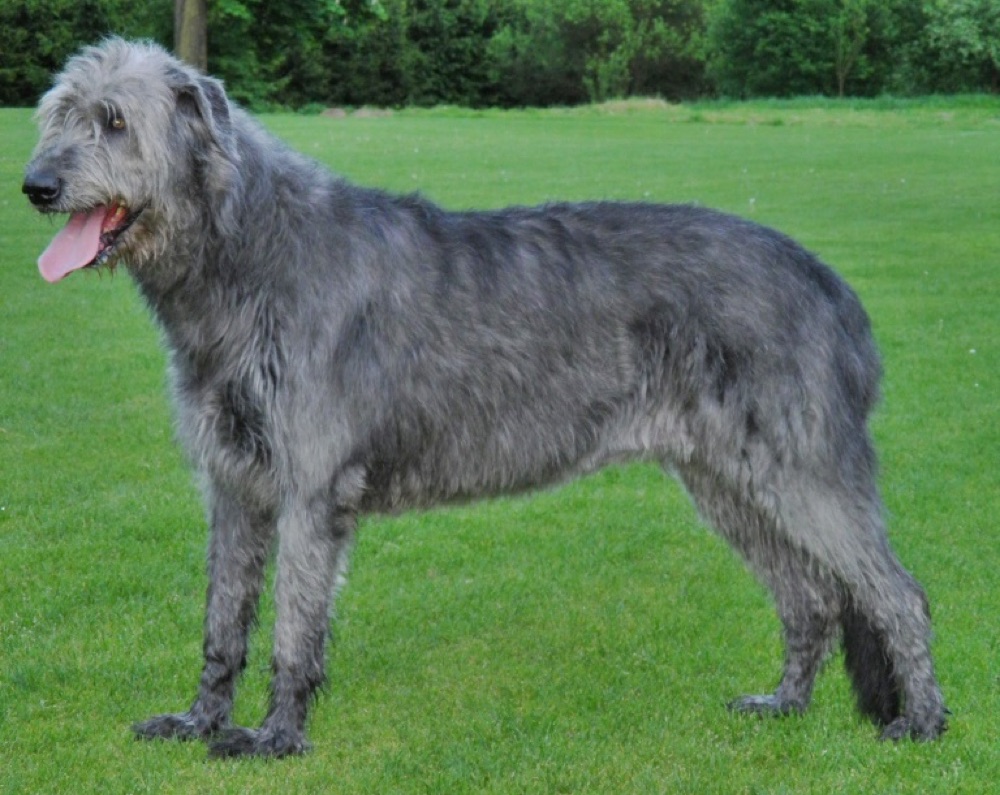

Where the Irish Wolfhound came from
The Irish Wolfhound is a giant sighthound from Ireland. Large hounds were prized there for hunting wolves and deer, and they were given as gifts to royalty. In 1571 the writer Edmund Campion described Irish hounds for hunting wolves as bigger of bone and limb than a colt.
As wolves died out in Ireland, so did most of the big hounds. The last wild wolf in Ireland is said to have been killed in 1786. A British army officer, Captain George Augustus Graham, rebuilt the breed in the 1800s. He used the few surviving Irish hounds, plus Scottish Deerhounds and Great Danes, and he founded the Irish Wolfhound Club in 1885.
The AKC recognized the breed in 1897. In 1902 the Irish Wolfhound was named the regimental mascot of the Irish Guards. Today they are known as gentle, quiet giants that do best with space and a calm home.
- 1652 Oliver Cromwell publishes an order in Kilkenny to keep enough hounds in Ireland to control wolves
- 1885 Captain Graham founds the Irish Wolfhound Club and sets the first breed standard
- 1897 AKC recognizes the Irish Wolfhound
- 1902 The Irish Wolfhound is declared the regimental mascot of the Irish Guards
The job an Irish Wolfhound was bred for
A coursing hound built to chase and bring down wolves, deer and other big game by speed and size. That is why many Irish Wolfhounds chase moving things by sight, but are calm and soft in the house. They need room to stretch out, not a hard workout every day.
What you may see at home
Gentle giant, leans on people, chases anything that runs, can be pushy by size alone.
Give them: Safe, fenced space to stretch out, leash manners early, lure coursing, and a soft bed. Calm and short sessions.
Sports that fit an Irish Wolfhound
- Lure coursing. Lets a sighthound run by sight in a safe, fenced field
- Therapy work. Their calm, gentle size makes them a hit with people of all ages
- Rally. Slow, steady pattern work suits a big, gentle dog
- Tracking. Gives a hound a quiet, focused nose job
- Hiking. Easy, steady walks fit their style better than hard running
Training tips for an Irish Wolfhound
- Start young and keep it kind. A fully grown wolfhound is far too big to be pulled or pushed around.
- Reward calm walking early, since a leash tug from a giant dog is hard to fix later.
- Practice a strong recall in fenced areas only. Sighthounds can take off after anything that moves.
- Teach a mat and a settle, and pay for lying down. Sensitive dogs shut down with harsh words.
Body and health
Deep chest, so bloat is a concern. Very large breeds can be prone to heart problems and have shorter lives than small dogs. Keep puppies from jumping or running hard on slick floors while their bones grow.
Fun fact. The Irish Guards, a British Army regiment, have had an Irish Wolfhound as their regimental mascot since 1902.
Breed is where we start
A study of more than 18,000 dogs found breed explains only about 9 percent of the differences in behavior between dogs (Morrill and others, Science, 2022). So your Irish Wolfhound is a starting guess, not a label. We find the drive your dog actually runs on, give it a job, and teach you to read them.
Free tools for your dog
- Breed drive calculatorMixed breed? Add the other breeds and see the drives your dog was bred with.
- Dog breed quizTen photos, four names each. The same quiz our trainers take.
- Dog drive testAnswer everyday moments and find the job your dog runs on.
Looking for a different breed? See what 137 breeds were bred to do, and download any of their guides.