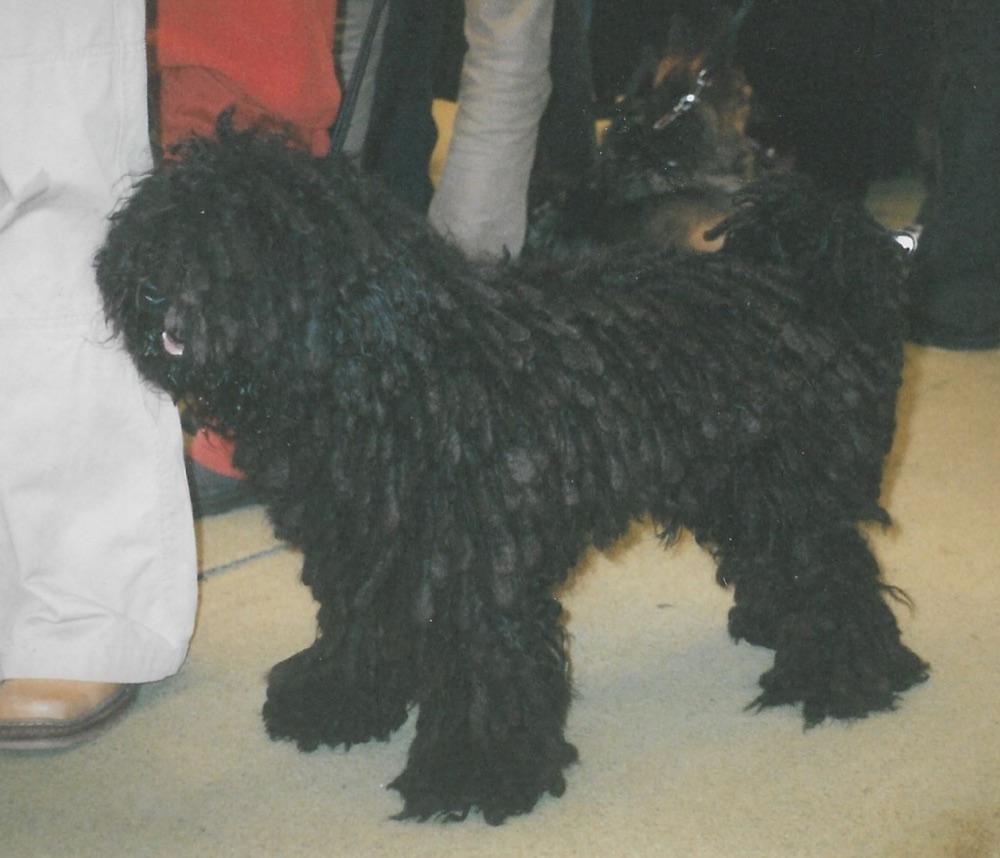

Where the Puli came from
The Puli is a Hungarian herding dog. The Magyars probably brought them to Hungary in the 9th century. They herded sheep on the plains, with larger guardian breeds like the Komondor or Kuvasz watching the flock.
Around the start of the 1900s the breed was rediscovered, even as the sheepdog role was shrinking. Dr. Emil Raitsitz of Hungary's veterinary college studied the breed in the 1920s. In 1935, the U.S. Department of Agriculture imported four purebred Pulis to Beltsville, Maryland. American Puli history is thought to start with those four dogs.
The AKC recognized the Puli in 1936. Their coat forms long cords, and they are small, springy and quick. Today they are mostly family dogs.
- 9th century The Magyars probably bring the Puli to Hungary
- 1920s Dr. Emil Raitsitz studies the breed in Hungary
- 1935 Four Pulis are imported to Beltsville, Maryland
- 1936 AKC recognizes the Puli
The job a Puli was bred for
A sheepdog that moved flocks on the open plains and barked and bounced to turn them. Many Pulis today are loud, springy and quick, and they bark to tell you what they see.
What you may see at home
Springy, loud, quick, barks at everything, sticks close to one person.
Give them: Quiet cue, agility, and short, upbeat training. Build confidence with new places.
Sports that fit a Puli
- Herding. Fast and nimble, with a natural drive
- Agility. Quick turns and a love of motion
- Obedience. Smart and eager when it is fun
- Rally. Clear steps for a quick-thinking dog
- Scent work. A quiet job for a busy, noisy dog
Training tips for a Puli
- Reward quiet and calm. Pulis often bark to tell you everything.
- Teach polite greetings, since they jump and bounce.
- Use short, upbeat sessions. They tune out slow, dull work.
- Build confidence with new places and sounds, using treats.
Body and health
The corded coat needs regular care to keep it clean and dry. Hip dysplasia and eye problems can occur. Choose a breeder who health tests.
Fun fact. Nomadic shepherds are said to have sometimes paid about a year's salary for a Puli.
Breed is where we start
A study of more than 18,000 dogs found breed explains only about 9 percent of the differences in behavior between dogs (Morrill and others, Science, 2022). So your Puli is a starting guess, not a label. We find the drive your dog actually runs on, give it a job, and teach you to read them.
Free tools for your dog
- Breed drive calculatorMixed breed? Add the other breeds and see the drives your dog was bred with.
- Dog breed quizTen photos, four names each. The same quiz our trainers take.
- Dog drive testAnswer everyday moments and find the job your dog runs on.
Looking for a different breed? See what 137 breeds were bred to do, and download any of their guides.