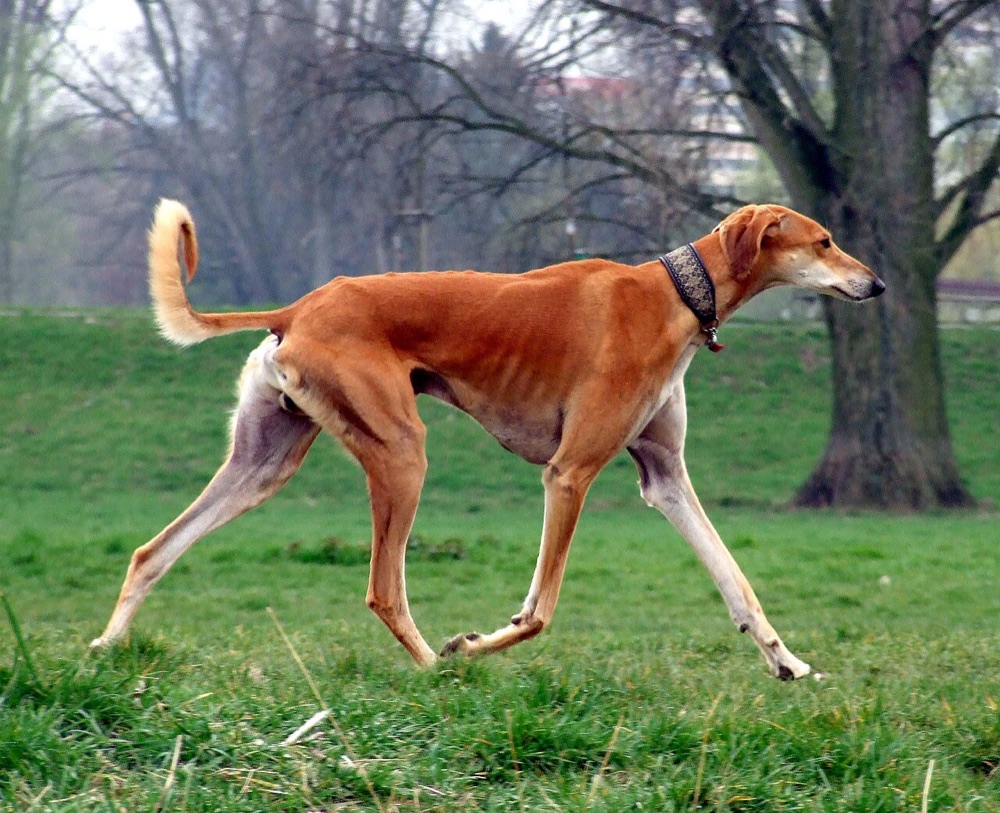

Where the Saluki came from
The Saluki is one of the oldest sighthound types. Dogs that look like Salukis appear in art from the ancient Middle East and in ancient Egyptian tombs. Nomadic Arab tribes kept them to run down gazelle and other game, and they were often given as gifts instead of sold.
Salukis were first brought to England in 1840. The first lasting breeding line there began in 1895 with Florence Amherst, who imported a pair from Egypt. After World War I, officers returning from the Middle East brought more home. In 1923 the Saluki or Gazelle Hound Club formed and the British Kennel Club recognized the breed.
The AKC recognized the Saluki in 1927. Many Arab traditions held dogs as unclean but made an exception for the Saluki, which could live in the family tent. Today they are quiet, reserved and gentle in the house, and very fast outside.
- 1840 Salukis are first brought to England
- 1895 Florence Amherst imports a breeding pair from Egypt and starts the first lasting Western line
- 1923 The Saluki or Gazelle Hound Club forms and the British Kennel Club recognizes the breed
- 1927 AKC recognizes the Saluki
The job a Saluki was bred for
A desert hunting hound that ran down fast prey such as gazelle and hare, by sight, over open ground. That is why Salukis explode after anything small that runs, and need long stretches of safe space. In the house they are quiet and cat-like, and often choose a soft spot to curl up.
What you may see at home
Quiet and aloof, curls up on soft spots, bolts after anything small that runs, slow to warm up.
Give them: Fenced sprint space, lure coursing or Fast CAT, a warm bed, and gentle reward-based training.
Sports that fit a Saluki
- Lure coursing. The sport they were built for, run in a safe, fenced field
- Straight racing. Short sprints with a lure let them go full speed
- Fast CAT. A timed 100-yard dash that suits a fast chaser
- Tracking. A calm job for a quiet hound
- Agility. Some enjoy it, though their independent streak needs patience
Training tips for a Saluki
- Use food and play, and keep sessions short and fun. Salukis can walk away from repeats and harsh words.
- Never trust off-leash in an open area. They can be across a field before you finish calling.
- Teach a settle on a bed, and reward it often. Calm is a skill that pays off in the house.
- Use a well-fitted harness or a martingale collar, since their heads are narrow and slip out of regular collars.
Body and health
Lean build with very little body fat, so they feel the cold and recover slowly from some sedatives. Deep chest, so bloat is a concern. Ask a vet who knows sighthounds about anesthesia.
Fun fact. The Saluki is one of the oldest sighthound types. Dogs that look like Salukis appear in Egyptian tomb art from the Middle Kingdom onward, which started around 2134 BC.
Breed is where we start
A study of more than 18,000 dogs found breed explains only about 9 percent of the differences in behavior between dogs (Morrill and others, Science, 2022). So your Saluki is a starting guess, not a label. We find the drive your dog actually runs on, give it a job, and teach you to read them.
Free tools for your dog
- Breed drive calculatorMixed breed? Add the other breeds and see the drives your dog was bred with.
- Dog breed quizTen photos, four names each. The same quiz our trainers take.
- Dog drive testAnswer everyday moments and find the job your dog runs on.
Looking for a different breed? See what 137 breeds were bred to do, and download any of their guides.